
Entity SEO for AI Search: Building a Brand Evidence Layer
Here’s a stat that should make every marketing leader pause: 85% of brand mentions in AI-generated answers originate from third-party pages, not your website (AirOps State of AI Search Report, 2026). Let that sink in. The content you spent months perfecting on your domain? AI systems are largely ignoring it in favor of what others say about you.
I was auditing an enterprise client’s AI visibility last month. Perfect schema markup. Comprehensive structured data. Zero AI citations. The problem wasn’t technical. They had no verifiable brand presence outside their own domain.
This is the entity SEO paradox most brands face today. You can optimize every technical element on your site and still be invisible to ChatGPT, Perplexity, and Google AI Overviews. The reason is simple: AI systems don’t just crawl your website. They verify your existence across sources. They cross-reference what you claim about yourself against what independent authorities say about you.
If AI isn’t citing your domain, what signals is it using to verify your brand exists and is credible?
The answer lies in what I call the Brand Evidence Layer, which is the verifiable, cross-referenceable signals that AI models use to confirm entity identity and authority. Most entity SEO advice focuses on schema markup, treating it as the destination rather than the starting point. But markup without third-party validation is a technical exercise with no AI visibility payoff.
In this article, I’ll walk you through the NAV43 Brand Evidence Layer Framework – the strategic system we use with clients to build cross-verifiable brand signals that AI models can validate across sources. You’ll learn exactly how to construct the entity infrastructure that makes your brand legible to AI systems, and why this work takes 6 to 12 months of deliberate effort rather than a quick schema implementation.

What Entity SEO Actually Means in the AI Era
The Shift from Links to Entity Verification
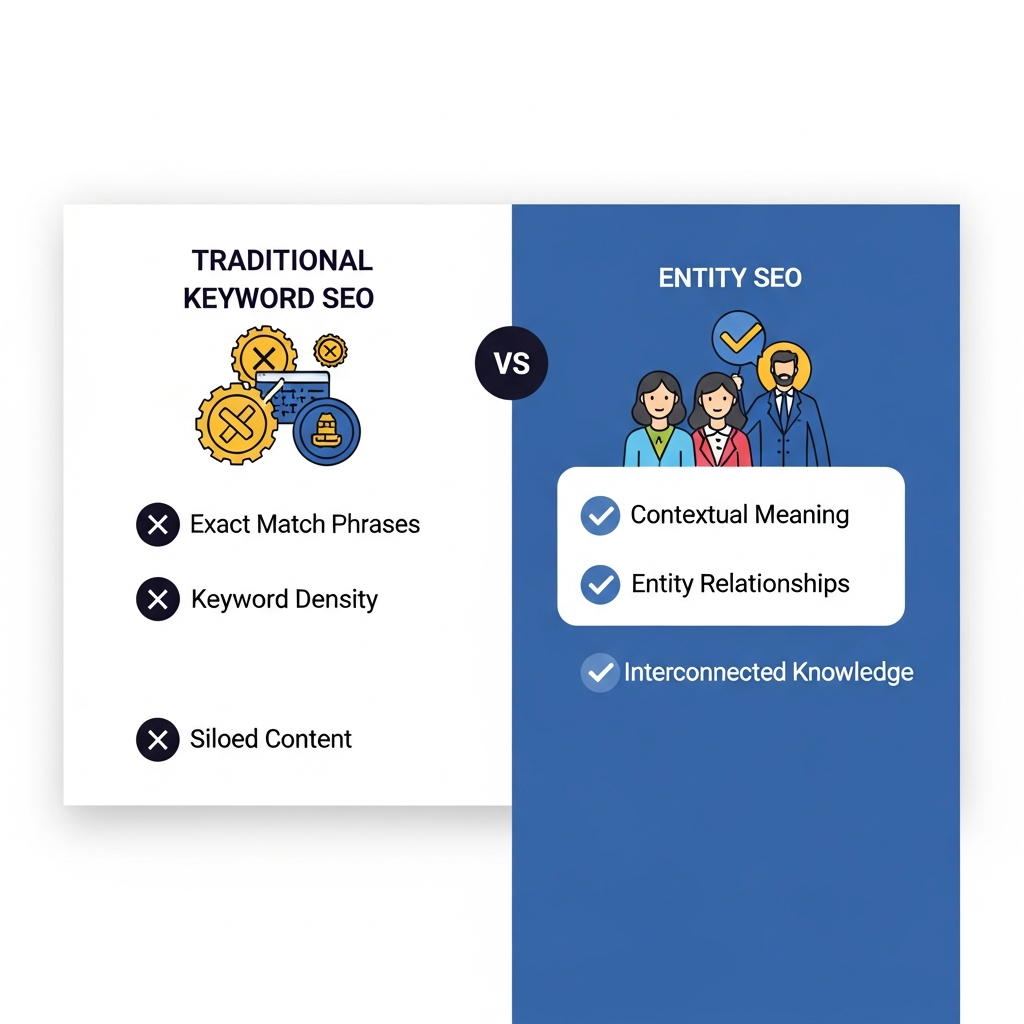
Traditional SEO treated backlinks as votes of confidence. More quality links pointing to your domain meant higher authority and better rankings. AI systems have fundamentally changed this equation.
AI models don’t “crawl” the web like Google’s spiders. They’re trained on massive datasets, and that training data comes from sources they’ve already validated as authoritative. When you ask ChatGPT about a brand, it doesn’t go fetch that brand’s website in real-time. It synthesizes what it learned during training – and that learning came from trusted sources that mentioned the brand consistently.
This is why Google’s Gemini AI is trained on the Knowledge Graph. The Knowledge Graph is infrastructure. It’s the prerequisite for AI Overview citations, not a vanity metric that gets you a nice Knowledge Panel on branded searches.
The distinction matters: traditional SEO made you findable; entity SEO makes you verifiable.
A search engine could find your website and surface it in results. An AI system needs to verify that your brand exists, that you do what you claim, and that trusted third parties confirm these facts. Without that verification layer, you’re invisible to the AI systems increasingly mediating how buyers research solutions.
Why Most Brands Are Invisible to AI
The core problem is entity fragmentation. AI systems cannot resolve conflicting brand signals across sources.
Walk through what happens when your About page describes you as a “digital transformation consultancy,” your LinkedIn Company Page says you’re a “technology solutions provider,” and your G2 profile lists you under “IT Services.” To a human, these might seem close enough. To an AI model trying to establish what your brand actually does, this is unresolvable noise.
The fragmentation compounds. Your founding date says 2018 on Crunchbase but 2019 on your website. Your CEO’s name appears differently across press mentions. Your service categories don’t align across directories. Each inconsistency weakens the entity signal.
Here’s the data that makes this tangible: brands are 6.5x more likely to earn AI citations through third-party sources than through their own domains (AuthorityTech, 2026). And YouTube mentions showed the strongest single correlation with AI visibility at 0.737 (Semrush AI Visibility Index, 2026). These aren’t trivial correlations – they’re telling us that AI visibility is built on signals you don’t fully control.
The brands I see winning AI citations have one thing in common: you can verify who they are and what they do across five or more independent sources, and those sources all say the same thing.
The NAV43 Brand Evidence Layer Framework
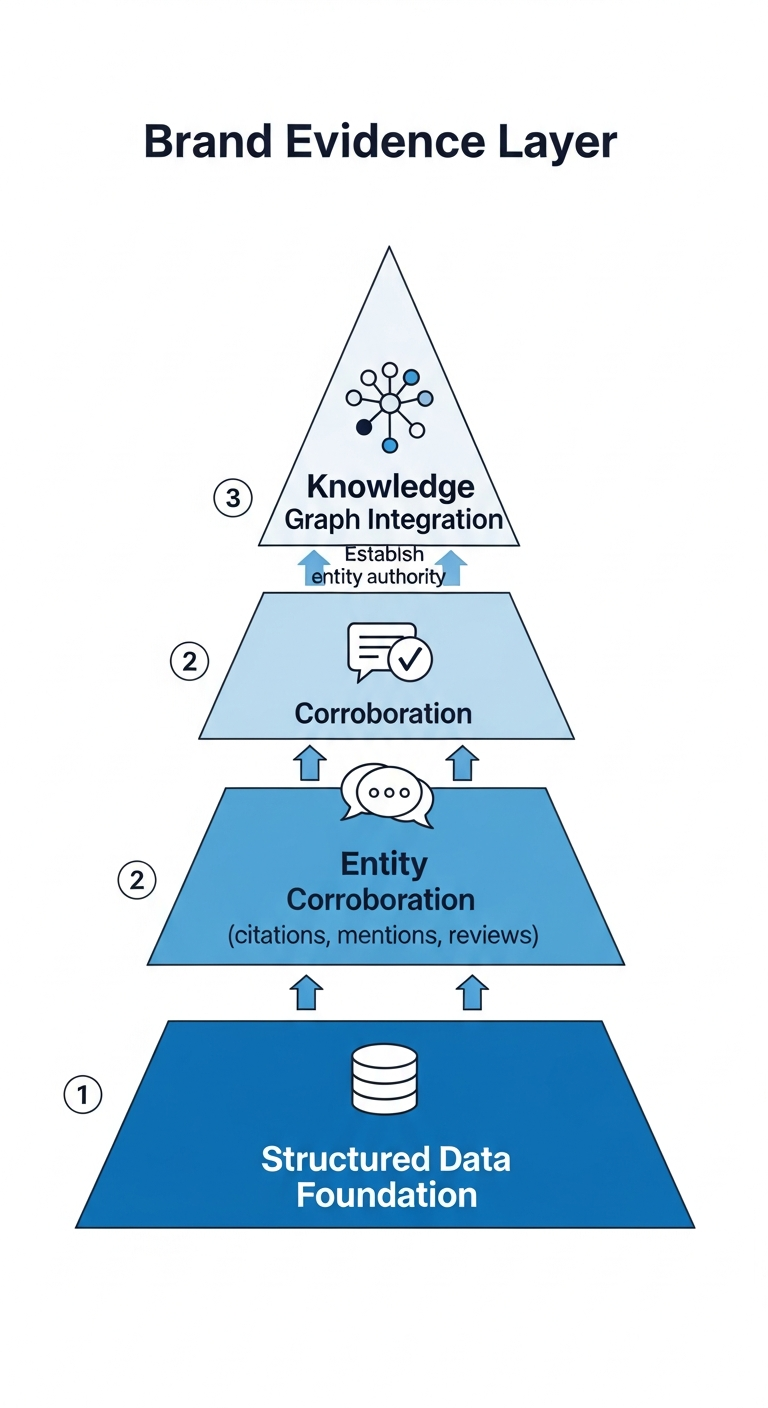
The Brand Evidence Layer Framework is the strategic architecture for building verifiable brand presence that AI models can cross-reference. This isn’t a checklist you complete in a sprint. It’s infrastructure that compounds over time. Early investments create the foundation for later visibility gains.
The framework has five interconnected layers, each building on the previous:
The NAV43 Brand Evidence Layer Framework
| Layer | Name | Function |
|---|---|---|
| 1 | Foundation | Owned Entity Definition |
| 2 | Validation | Knowledge Graph & Wikidata |
| 3 | Authority | Third-Party Citations |
| 4 | Social Proof | Review & Community Presence |
| 5 | Content | Citation-Ready Assets |
Think of these layers as a pyramid. You can’t build effective third-party citation strategies (Layer 3) if your owned entity definition (Layer 1) is inconsistent. You can’t expect AI systems to cite your content (Layer 5) if you have no review presence validating your existence (Layer 4).
Let me walk through each layer with the specificity you need to implement this.
Layer 1: Foundation – Owned Entity Definition
Everything starts with your About page. This is the canonical source of entity truth. It’s the document AI systems will use as the baseline for verifying claims made about you elsewhere.
Essential elements your About page must include:
- Exact brand name – not variations, not abbreviations, not “doing business as” alternatives
- Precise service or product categories – using industry-standard terminology
- Founding date – one date, verified, used everywhere
- Leadership team – names exactly as they appear on LinkedIn profiles
- Geographic scope – where you operate, serve clients, or have physical presence
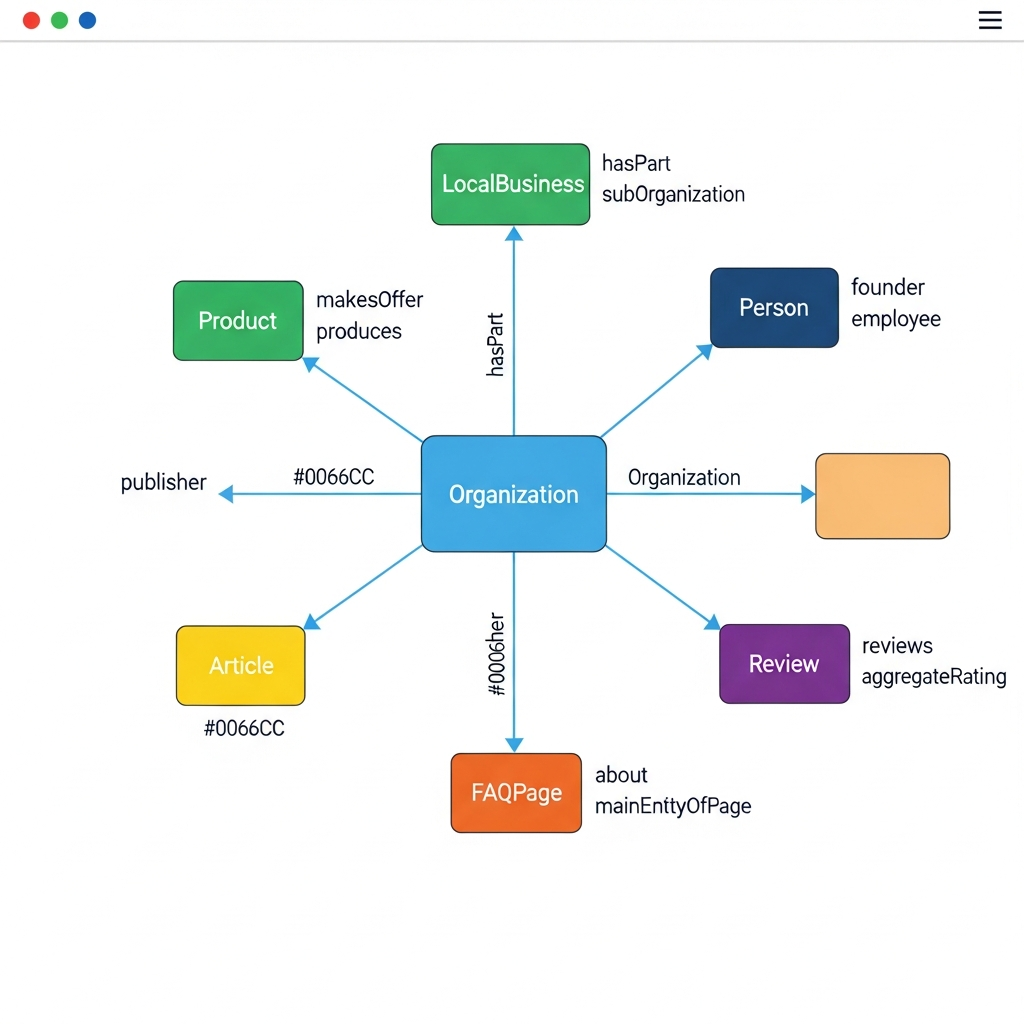
The technical implementation requires sameAs schema – linking your About page to all authoritative third-party profiles. This tells AI systems: “These profiles on LinkedIn, Crunchbase, and G2 are the same entity as this website.”
Your Organization schema needs to be complete: logo URL, contact information, social profile links. Incomplete schema is worse than no schema because it signals to AI systems that your entity definition isn’t fully established.
Here’s the consistency requirement that trips up most brands: the exact same brand descriptor must appear verbatim across all sources. Not similar language. Not paraphrased versions. Identical text.
We audit every client’s About page against their LinkedIn, Crunchbase, and G2 profiles. The mismatch rate is usually 60-70%. That’s 60-70% entity confusion for AI models.
Your action here is straightforward but tedious: create a master entity document with exact text for your brand name, tagline, description, service categories, and key facts. Then propagate that exact text across every platform where your brand appears.
Layer 2: Validation – Knowledge Graph & Wikidata
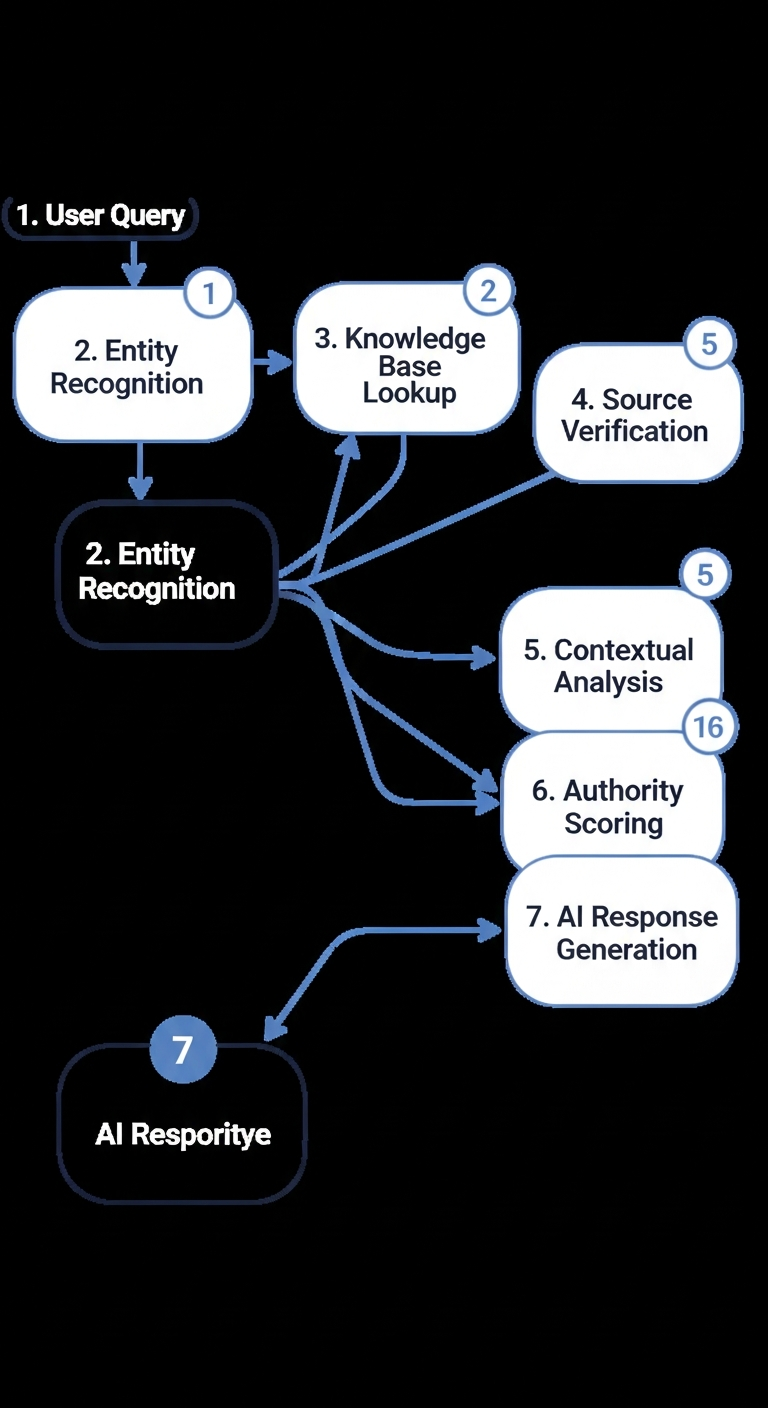
Wikidata is the highest-ROI entity action available for most brands that meet notability criteria. Here’s why: Google’s Knowledge Graph pulls directly from Wikidata. Gemini AI is trained on the Knowledge Graph. The path is direct.
Wikidata entry requirements you need to understand:
- Notability criteria – you must demonstrate that your brand has been covered in independent, reliable sources
- Required properties – instance of (organization type), official website, founding date, country, industry
- Source citations – every claim needs a verifiable external source
The path to Knowledge Graph inclusion follows a clear sequence: consistent entity signals across owned properties → Wikidata presence with proper citations → Knowledge Panel on Google → Gemini and AI Overview training data.
This is not a quick win. For most brands, the Wikidata submission process takes 2 to 4 months. You need to gather sources that establish notability, draft the entry according to Wikidata’s formatting requirements, submit for review, and iterate based on community feedback.
Properties to prioritize in your Wikidata entry:
- Official website (P856)
- Instance of (P31) – typically “business” or “company”
- Industry (P452)
- Founded (P571)
- Country (P17)
- Official name (P1448)
- CEO/Leadership (P169)
- Social media presence links
Each property needs a source citation. These citations should come from press coverage, industry directories, or official filings – not from your own website. Wikidata editors will reject entries that cite the brand’s own domain as the primary source.
For detailed guidance on building Knowledge Graph presence, see our complete Knowledge Graph strategy playbook.
Layer 3: Authority – Third-Party Citations
Sites with over 32,000 referring domains are 3.5x more likely to be cited by ChatGPT than those with fewer than 200 (SE Ranking, 2026). But this isn’t about backlink volume in the traditional SEO sense. It’s about authoritative source diversity.
AI systems weight citations from sources they already trust. A mention in an industry publication that AI models have validated as authoritative carries more weight than dozens of links from irrelevant directories.
Priority sources for B2B brands:
- Industry publications and trade media
- Analyst reports and market research
- Conference speaking bios and session pages
- Podcast appearances with show notes
- Contributed articles in business publications
- Case studies on partner or client websites
This is where brand mention acquisition replaces traditional link building. The goal isn’t a followed backlink, but it’s appearing in sources that AI models already trust. An unlinked mention in Gartner research does more for your AI visibility than a dozen guest post links from low-authority blogs.
What makes a citation AI-valuable:
- The source must itself be authoritative (AI systems have already validated it)
- The mention must be contextually relevant (you’re mentioned in the context of your actual expertise)
- The information must be consistent with your entity definition (same brand name, same description)
We’ve shifted client link-building programs entirely toward brand mention acquisition. The goal isn’t a followed link. It’s appearing in sources that AI models already trust. This requires different outreach strategies, different relationship building, and different success metrics.
Layer 4: Social Proof – Review & Community Presence
Here’s a stat that should redirect your priorities immediately: brands with no Trustpilot profile have a median AI citation rate of 1%. Brands with even minimal profiles containing just 1 to 13 reviews jump to 53.5% (Seer Interactive, 2026).
Review presence isn’t just about conversion optimization anymore. It’s a fundamental entity signal that AI systems use to verify brand existence and credibility.
Review platforms that matter for AI visibility:
- G2 – essential for B2B SaaS and professional services
- Trustpilot – broad consumer and B2B coverage
- Capterra – software-specific validation
- Industry-specific directories – legal directories for law firms, Clutch for agencies, etc.
Beyond reviews, community presence signals matter. Reddit mentions demonstrate authentic user discussion. Quora answers show expertise in action. LinkedIn engagement patterns indicate active participation in professional discourse.
The YouTube correlation deserves special attention. YouTube mentions showed the strongest single correlation with AI visibility at 0.737 (Semrush AI Visibility Index, 2026). This suggests video presence, whether your own channel, appearances on other channels, or mentions in relevant videos, contributes meaningfully to entity verification.
This layer is where most B2B brands have the largest gaps. They invest heavily in owned content and ignore earned validation entirely. If you have a content marketing program but no review acquisition strategy, you’re building on an incomplete foundation.
Layer 5: Content – Citation-Ready Assets
AI models cite specific content formats more than others. Understanding what gets cited allows you to structure content for AI extraction.
Here’s the critical insight: 44.2% of all LLM citations are drawn from the first 30% of content (Growth Memo, 2026). Your introduction isn’t just for human readers, it’s the primary extraction zone for AI systems.
Citation-ready content characteristics:
- Clear thesis statements in the introduction that can be quoted directly
- Statistics with sources that AI can verify
- Expert perspectives attributed to named individuals
- Structured data markup that makes content machine-readable
- Sequential heading structure that creates logical content hierarchy
Pages with quotes and statistics show 30-40% higher visibility in AI-generated answers compared to pages without them (321 Web Marketing, 2026). And pages with sequential headings and rich schema correlate with 2.8x higher citation rates (AirOps State of AI Search, 2025-2026).
The practical implication: every piece of content needs a “quotable zone” in the first third. This zone should contain your main argument, supported by specific data, attributed to your brand’s expertise.
For detailed guidance on structuring content for AI citation, our AI SEO content format guide covers the tactical implementation.
The Entity Consistency Audit: Finding Your Gaps
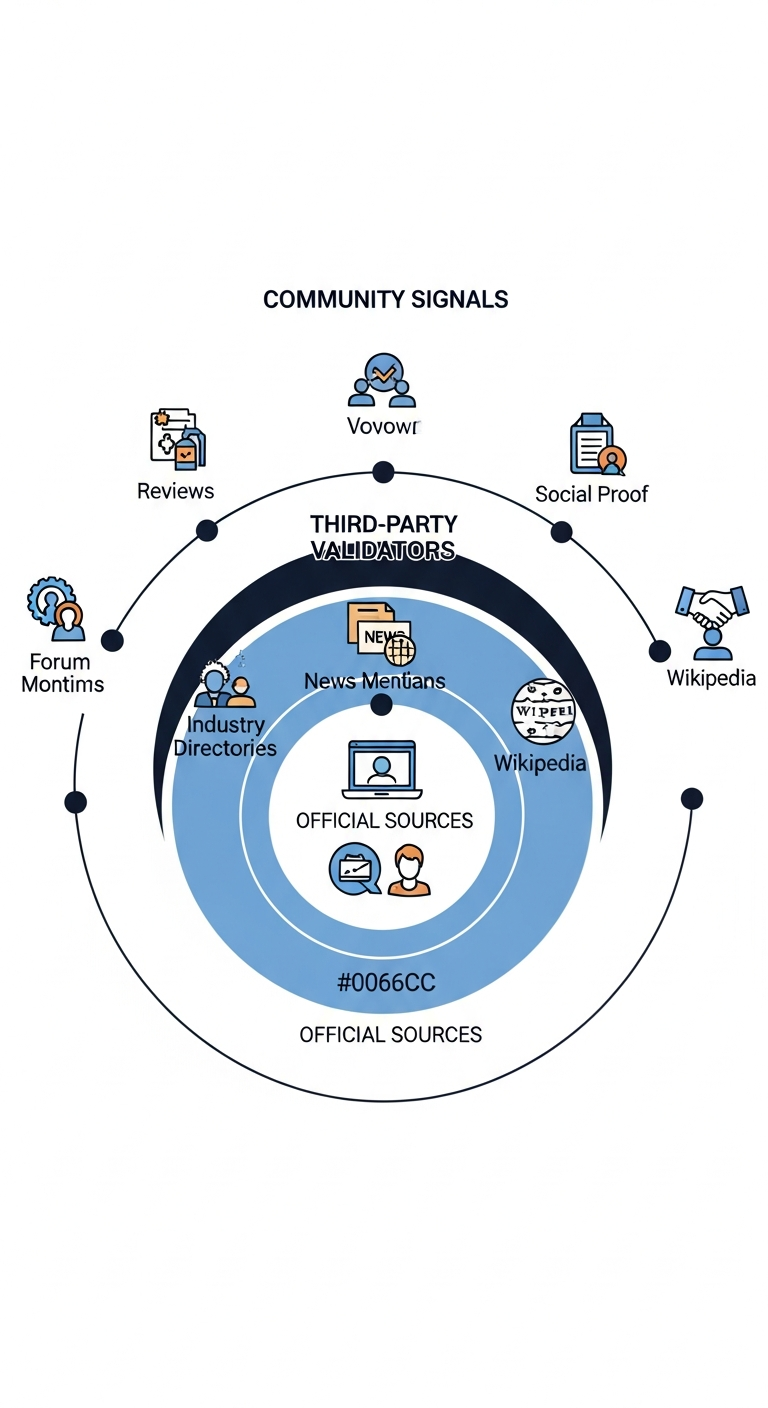
Before you can build a brand evidence layer, you need to understand where your entity signals are broken. The entity consistency audit reveals the gap between how you describe your brand and how AI perceives it.
Three-phase audit process:
Phase 1: Inventory all brand mentions across platforms
Document every platform where your brand appears: website, social profiles, directories, review sites, press mentions, partner pages. Create a spreadsheet capturing the exact text used for brand name, description, and service categories on each platform.
Phase 2: Document inconsistencies
Compare each platform against your master entity definition. Flag every variation, discrepancy, or missing element. Look for date inconsistencies, name variations, category mismatches, and incomplete profiles.
Phase 3: Prioritize fixes by AI impact
Not all inconsistencies matter equally. Prioritize fixing high-authority platforms first (LinkedIn, G2, Crunchbase), then work down to lower-authority sources.
Entity Consistency Audit – Quick Reference Checklist
- [ ] Exact brand name match across: About page, LinkedIn Company Page, Crunchbase, G2, Trustpilot, Wikipedia/Wikidata
- [ ] Service/product category alignment across all profiles
- [ ] sameAs schema pointing to all authoritative profiles
- [ ] Founding date consistency
- [ ] Leadership team consistency (names match LinkedIn exactly)
- [ ] Geographic scope accuracy
- [ ] Logo and visual identity consistency
- [ ] Contact information accuracy (NAP for local, corporate info for enterprise)
- [ ] Social profile links working and current
- [ ] Description text identical across platforms (not paraphrased)
To see how AI currently perceives your brand, query AI systems directly. Ask ChatGPT: “What does [Brand Name] do?” Ask Perplexity the same question. Ask Google’s AI Overview by searching your brand name with contextual queries.
The responses reveal how well AI systems can synthesize your entity. Vague or incorrect answers indicate entity fragmentation. Confident, accurate answers indicate strong entity signals.
Here’s a sobering data point: only 11% of domains are cited by both ChatGPT and Perplexity (Multiple sources, 2025-2026). The platforms don’t share citation behavior, which means your entity needs to be visible across multiple AI systems and each has different source preferences.
We run this audit quarterly for clients. The first audit always surfaces 15 to 20 inconsistencies. Most brands have never looked at their entity signals as a system.
Measuring Entity Authority: KPIs That Actually Matter
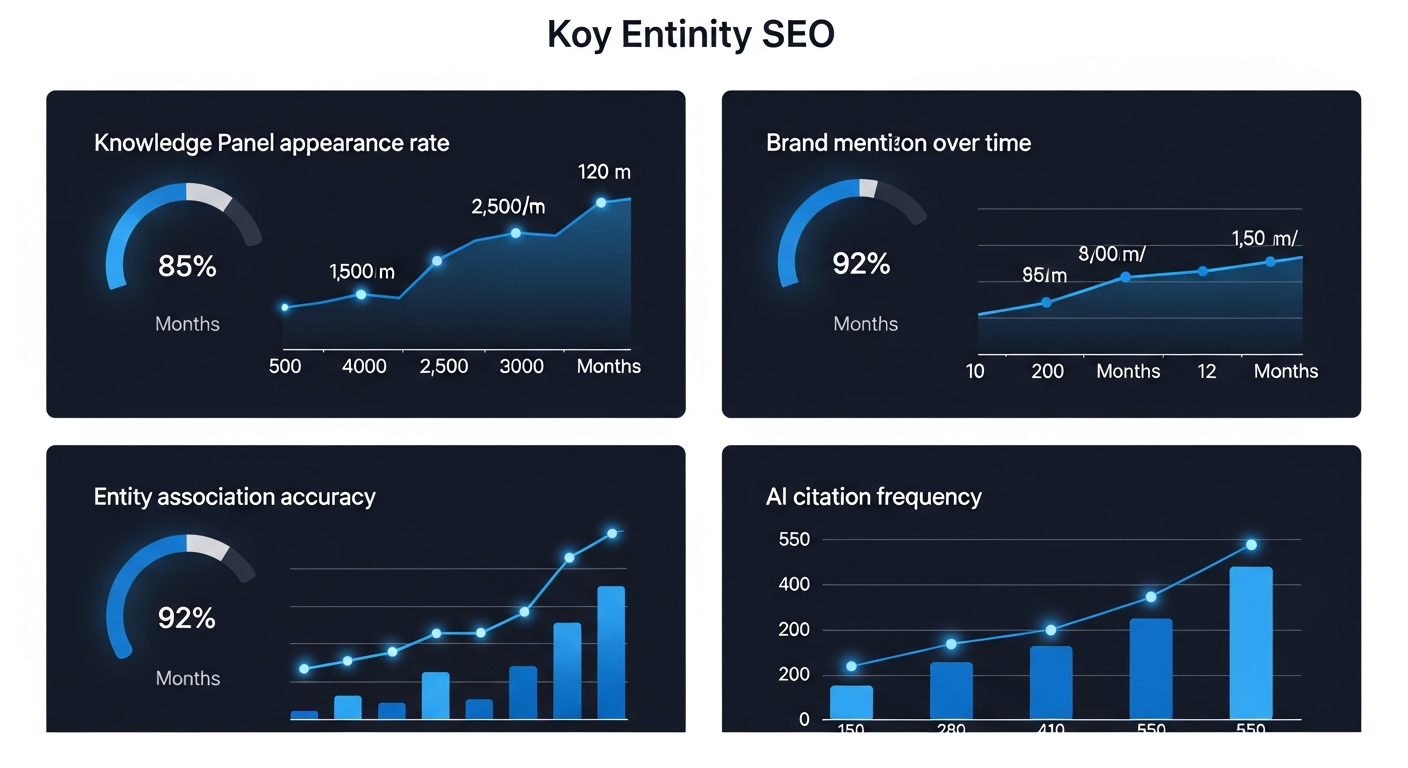
Only 16% of brands track AI search performance (McKinsey). This measurement gap means most marketing teams are flying blind on entity authority. They can’t improve what they don’t measure.
Entity SEO KPIs
| Metric | What It Measures | How to Track | Target |
|---|---|---|---|
| AI Citation Frequency | How often your brand appears in AI-generated answers | Query top 50 target phrases monthly in ChatGPT, Perplexity, Google AI Overviews | Upward trend month-over-month |
| Source Diversity Score | Number of unique third-party sources citing your brand | Backlink audit + manual citation tracking | 10+ authoritative unique sources |
| Entity Recognition Rate | Whether AI correctly identifies your brand and services | Direct queries like “What does [Brand] do?” | Accurate response in 80%+ of tests |
| Branded Search Lift | Increase in branded search volume | Google Search Console + third-party tools | 15-25% YoY growth |
| Knowledge Graph Presence | Whether your brand has a Knowledge Panel | Direct Google search | Yes/No + completeness score |
| Review Profile Completion | Presence and activity on key review platforms | Manual audit of G2, Trustpilot, Capterra | Active profiles on 3+ platforms |
The connection between entity metrics and business outcomes is becoming clearer. ChatGPT referral traffic converts at 15.9% versus 1.76% for Google organic (Seer Interactive, cited in research). When AI does cite your brand, the traffic quality is dramatically higher.
Entity authority compounds. Each new authoritative mention reinforces previous signals. Each quarter of consistent entity signals makes the next quarter’s citations more likely. This is why measurement needs to track trend lines, not just snapshots – you’re building infrastructure that pays dividends over time.
For a complete framework on measuring AI search visibility, including dashboard setup and tracking protocols, see our dedicated measurement guide.
The 6-Month Entity Authority Roadmap
Entity SEO compounds, but it requires sustained investment. Here’s the realistic timeline for building a brand evidence layer – not a quick win, but a strategic infrastructure project.
Months 1-2: Foundation & Audit
Primary objectives:
– Complete entity consistency audit across all platforms
– Fix owned property inconsistencies (About page, schema, social profiles)
– Create master entity document with canonical text
– Claim and optimize G2, Trustpilot, Crunchbase profiles
– Implement Organization schema with complete sameAs references
– Begin Wikidata research and notability documentation
Key deliverables:
– Entity audit report with prioritized fixes
– Updated About page with complete entity definition
– Schema markup deployed with all sameAs links
– Claimed profiles on priority directories
Months 3-4: Validation & Authority Building
Primary objectives:
– Submit Wikidata entry (if notability criteria met)
– Launch brand mention acquisition campaign targeting authoritative sources
– Secure 3 to 5 authoritative third-party mentions
– Implement citation-ready content formatting on top 10 pages
– Begin review acquisition outreach
Key deliverables:
– Wikidata entry submitted or in progress
– First batch of third-party citations secured
– Top content pages reformatted for AI extraction
– Review acquisition workflow active
Months 5-6: Scale & Measurement
Primary objectives:
– Expand third-party citation sources to new verticals
– Build review volume on priority platforms
– Establish monthly AI citation tracking workflow
– Iterate on content formatting based on citation data
– Document baseline metrics for ongoing comparison
Key deliverables:
– Monthly AI visibility report established
– Review volume meeting platform thresholds
– Expanded citation presence across authority sources
– Documented ROI framework for ongoing investment
Most brands want AI visibility in 30 days. The reality is that entity authority takes 6 months to build and 12 months to compound. The brands starting now will own their categories by 2027.
Where Most Entity Strategies Fail
Throughout working with clients on entity SEO, I’ve seen the same failure patterns repeatedly. Understanding these patterns helps you avoid them.
The schema-only fallacy is the most common. Perfect schema markup without third-party validation produces zero AI citations. Schema tells AI systems how to read your content, but if AI doesn’t trust your domain as a source, that readable content never gets cited. Schema is necessary but not sufficient.
The owned-content trap catches brands with strong content marketing programs. They publish extensively on their blog, optimize for traditional SEO, and wonder why AI systems ignore them. The issue: they’ve over-invested in owned content while ignoring third-party presence entirely. AI systems weight what others say about you more heavily than what you say about yourself.
The inconsistency blind spot happens because marketing teams don’t audit their own entity signals. They assume consistency because they know what the brand does. But different team members created different profiles at different times, and nobody has compared them systematically. The inconsistencies accumulate invisibly until you conduct a formal audit.
The quick-win mentality kills entity strategies before they can work. Entity SEO requires sustained investment, not tactical sprints. The team implements schema markup in week one, doesn’t see citation improvements by week four, and abandons the strategy. Entity authority compounds over months, not weeks.
I’ve seen brands spend $50K on schema markup projects and wonder why their AI visibility didn’t change. Schema is necessary but not sufficient. It’s the foundation layer, not the whole building.

What to Build First
If you’re overwhelmed by the scope of entity SEO, here’s the prioritization framework based on impact-to-effort ratio:
Immediate (This Week):
1. Audit and fix entity inconsistencies across your top 5 platforms
2. Create a master entity document with canonical text for brand name, description, and categories
Week 1-2:
3. Implement Organization schema with sameAs references to all authoritative profiles
4. Claim and optimize your G2 profile plus one additional review platform
Month 1:
5. Reformat your top 5 pages for citation-readiness (quotable introductions, statistics with sources)
6. Begin Wikidata research – gather notability sources, assess eligibility
Month 2+:
7. Launch brand mention acquisition targeting industry publications and analyst coverage
8. Establish monthly AI citation tracking to measure progress
The long-term view matters here: entity SEO is infrastructure, not a campaign. Unlike a content campaign that generates traffic and then decays, entity signals compound. Each authoritative citation reinforces the next. Each month of consistency makes your brand more legible to AI systems.
Stop treating entity SEO as a technical checkbox. Start treating it as the foundation for how AI understands your brand. The brands building evidence layers now will be the ones AI cites for the next decade.
Building Your Entity Foundation
Entity SEO for AI search isn’t about schema markup tactics. It’s about constructing a verifiable identity layer that AI models can cross-reference across sources. The brands winning AI citations have built systematic evidence architecture and that takes deliberate, sustained work.
Here’s what changes in your work tomorrow:
- Audit before you optimize. You can’t fix entity fragmentation you haven’t documented. Start with a comprehensive audit of how your brand appears across platforms.
- Third-party validation trumps owned content. Shift investment from publishing more content to building presence in sources AI already trusts.
- Consistency is non-negotiable. Every variation in your brand description weakens entity signals. Create a master document and enforce it across platforms.
- Measure what matters for AI. Traditional SEO metrics don’t capture entity authority. Build tracking for AI citation frequency, source diversity, and entity recognition.
- Think in 6-month horizons. Entity authority compounds, but it takes time. Quick wins in schema markup without third-party validation waste effort.
The competitive window is now. Most brands haven’t started building their evidence layers. The ones who invest in entity infrastructure today will be the authoritative sources AI cites when your buyers ask for recommendations.
Ready to build your brand evidence layer? Get a Free Growth Plan that includes an AI visibility audit and entity consistency assessment. We’ll show you exactly where your entity signals are broken and how to fix them.
The AI systems mediating buyer research are already deciding which brands to cite. Make sure yours is one of them.
