
Pricing Page AEO: How B2B Service Pricing Pages Can Earn AI Mentions
Pricing page AEO is one of the most overlooked opportunities in B2B marketing: pricing pages receive LLM-referred visitors at 3.5x their baseline share of overall traffic (Gushwork AI, 2026).
The paradox is striking. B2B companies obsess over thought leadership articles, pillar guides, and educational content – all designed to capture AI citations. Meanwhile, the page that answers the exact question buyers ask AI first sits unoptimized, hidden behind a “Contact Sales” button, or worse, completely absent.
Optimizing your pricing page for AI isn’t just an opportunity. It’s becoming a competitive necessity.
Consider how buyers actually research today. According to Forrester’s 2026 Buyers’ Journey Survey, 54% of B2B buyers researched products in AI tools, and 55% compared vendors using AI before ever talking to sales. When a procurement manager asks ChatGPT “how much does [your competitor] vs [you] cost,” the vendor with quotable pricing wins the citation. The one hiding behind forms gets skipped entirely.
This isn’t theoretical. ChatGPT uses site: operators to go directly to vendor pricing and product pages in roughly 50% of fan-out queries (VisibleIQ, 2026). Your pricing page isn’t just a conversion asset anymore – it’s a visibility asset in the AI search era.
The stakes couldn’t be higher. If your pricing information isn’t structured for AI extraction, you’re invisible in the exact queries that signal high buying intent.
This guide shows you exactly how to structure your pricing page so AI can cite it, position your company in comparison queries, and convert the highest-intent traffic on the web.
What You Need Before You Start
Before diving into optimization, gather these essentials:
- Access to your current pricing page and any existing structured data markup
- Your actual pricing information – tiers, price points, billing cycles, even ranges or “starting at” figures
- 5-10 pricing-related questions your sales team gets repeatedly (these become your FAQ foundation)
- CMS or developer access to implement schema changes
- Google Search Console and GA4 with proper UTM tracking or dedicated AI traffic monitoring
A quick note on transparency: if your company policy prohibits publishing any pricing, this guide will show you how to publish ranges or qualifiers that still earn citations. Complete price hiding is the only scenario where this approach breaks down entirely.
The goal isn’t necessarily publishing exact dollar amounts. It’s giving AI systems something quotable.
Why Pricing Pages Win AI Citations (When Most Commercial Pages Don’t)
AI Systems Need Quotable Facts, Not Marketing Narratives
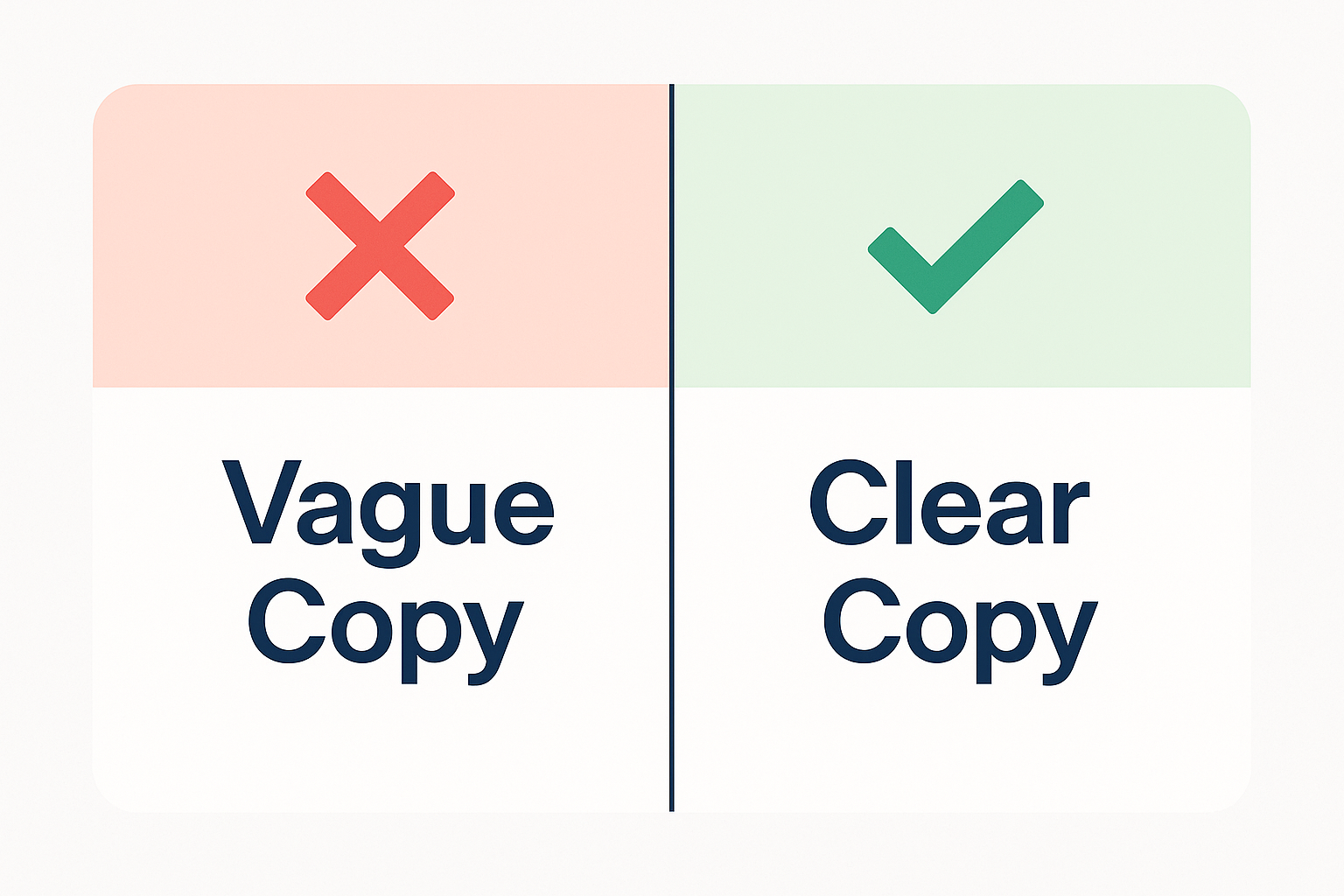
The fundamental difference between pages that get cited and pages that don’t comes down to extractability. AI models cite content they can extract cleanly and attribute confidently. Vague value propositions and “let’s talk” CTAs give them nothing to quote.
Pricing pages contain exactly the kind of specific, factual information AI needs: numbers, tier names, feature lists, billing terms. This isn’t subjective content that requires interpretation – it’s concrete data that can be lifted and attributed.
Product pages made up 16.39% of retrieved pages in ChatGPT datasets, with official brand pages often supplying specifications and pricing (Lily Ray/Amsive, 2026). This isn’t accidental. AI systems gravitate toward pages with quotable facts because those facts can be verified and attributed with confidence.
Compare this to your typical service page. “We deliver exceptional results for forward-thinking companies” tells AI nothing it can cite. “$299/month for teams up to 10 users, including unlimited integrations” gives AI exactly what it needs for a comparison query.
We’ve seen this directly in client work: pricing pages earn AI mentions in comparison queries, while the same brand’s service pages never get cited. The difference is quotable facts.
The Buyer Intent Alignment
Pricing is among the first questions buyers ask AI because it qualifies the fit. Before investing time in deeper research, buyers want to know if a solution fits their budget. When the intent is “compare pricing for X tools,” AI needs pages that answer the question directly.
Transparent pricing has been B2B buyers’ #1 wish-list item for vendors for four consecutive years (TrustRadius, 2026). This isn’t a preference that AI search created – it’s a buyer behavior pattern that AI search now amplifies.
I’ve watched this play out repeatedly in client work. “Contact Sales” pages aren’t mysterious or premium anymore – they’re just unsearchable. AI can’t cite what doesn’t exist. Brands that understood this early have been building visibility while their competitors wonder why their blog traffic doesn’t convert.
The Bottom-Line-Up-Front Pricing Structure
Lead With Price Anchors, Not Context
Here’s where traditional pricing page wisdom fails in the AI era. The old approach – build context, justify value, reveal price at the bottom – works against AI extraction.
Generative engines extract 44.2% of all citations from the first 30% of a page’s text (Anymorph AI, 2026). If your tier names, price points, and primary differentiators are buried below the fold, they may never get cited.
The structural implication is clear: your pricing must appear in the first 300 words of page content. Not after the hero image. Not after the “why choose us” section. First.
New structure: State the price clearly → then explain the value → then handle objections.
This feels backward to marketers trained on traditional conversion psychology. But AI extraction changes the equation. You can’t convert visitors who never found you because AI couldn’t quote your pricing in the comparison query that would have sent them your way.
Creating Quotable Tier Summaries
Each pricing tier needs a self-contained summary that could be quoted without surrounding context. Think of these as the atomic units AI systems extract.
Include:
– Tier name
– Price (or price range)
– Billing cycle
– 3-5 key features
– Ideal customer profile
Avoid:
– Relative language without absolute information (“our most popular plan” means nothing to AI without the specifics)
Good example: “Starter Plan: $49/month, billed annually. Includes 5 user seats, 10GB storage, email support. Best for small teams getting started.”
Service business example: “SEO Retainer: starts at $4,000/month on a 12-month agreement. Includes technical audit, four content pieces per month, and monthly reporting. Best for B2B companies ready to scale organic pipeline.”
Bad example: “Our entry-level option for companies looking to explore our platform.”
The first two examples are quotable. AI can extract them, attribute them to your brand, and include them in a comparison. The last example tells AI nothing useful.
The Comparison Table Format AI Can Extract
Tables with clear headers and consistent formatting are structurally parseable by AI. A well-constructed comparison table becomes one of the most citation-ready elements on your page.
| Feature | Starter ($49/mo) | Professional ($149/mo) | Enterprise (Custom) |
|---|---|---|---|
| User Seats | 5 | 25 | Unlimited |
| Storage | 10GB | 100GB | Unlimited |
| Support | Priority Email + Chat | Dedicated CSM | |
| Integrations | 3 | 15 | Custom |
| Analytics | Basic | Advanced | Custom Reporting |
Key table requirements:
– Feature names in rows
– Plan names with prices in column headers
– Cell values that include specifics (not just checkmarks)
– Placement above the fold or immediately after opening tier summaries
The specificity matters. “5 users” is quotable. A checkmark isn’t.
Schema Markup That Makes Your Pricing Machine-Readable
Content with proper schema markup has a 2.5x higher chance of appearing in AI-generated answers, with sites implementing complete schema seeing up to 40% more AI Overview appearances (Stackmatix, 2026). Other research is more cautious: Ahrefs (May 2026) found no significant citation uplift from adding schema to pages that were already cited. For pricing pages, schema’s real value is accuracy. It gives AI systems unambiguous price, currency, and billing data to quote.
The Pricing Page Schema Stack
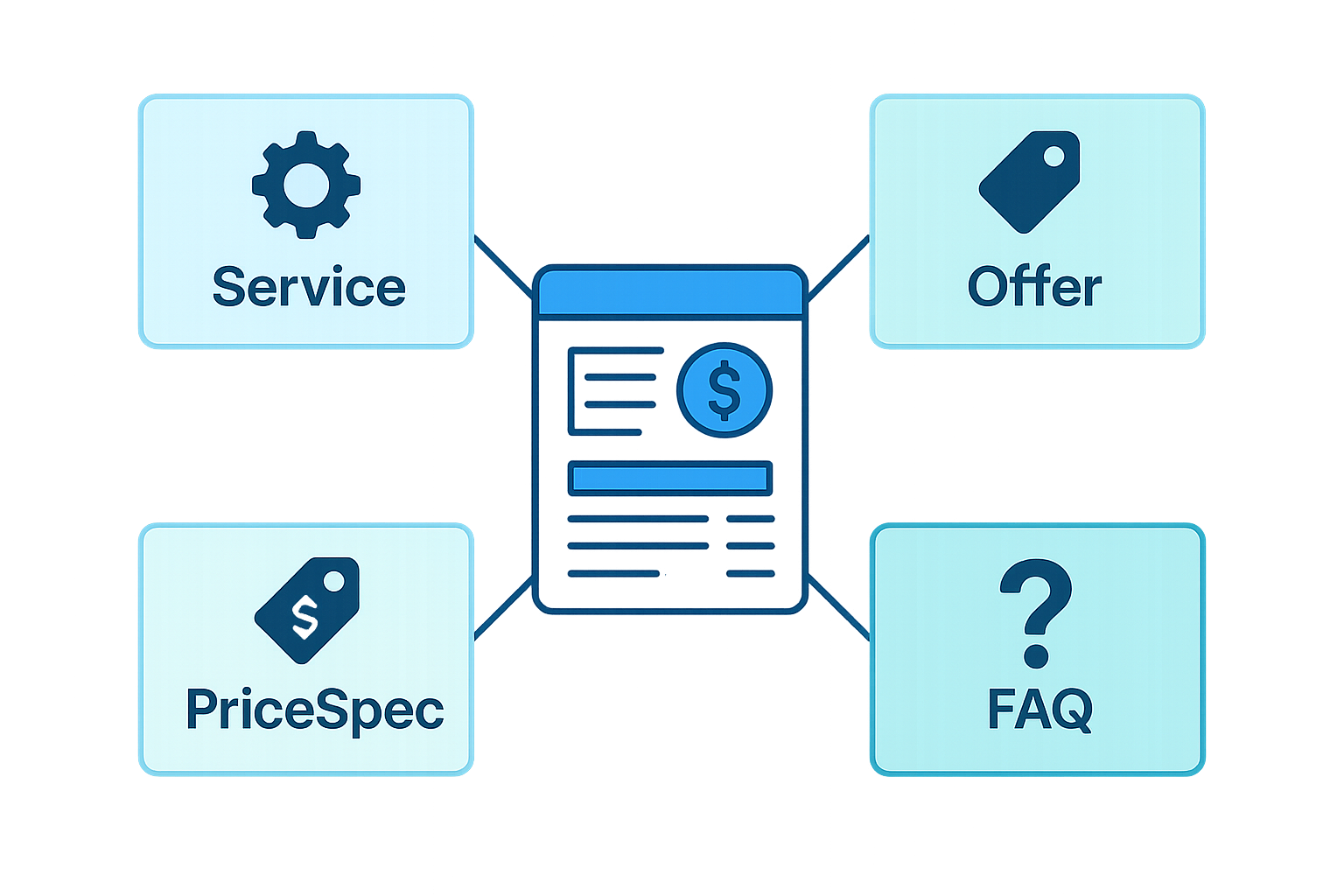
Base requirement: Product or SoftwareApplication schema. Use SoftwareApplication for SaaS products, Product for services with defined deliverables. For service businesses, see our guide to Service Schema for AI Search.
Add Offer schema nested within, containing:
– price
– priceCurrency (use ISO 4217 codes – “USD”, “CAD”, “EUR”)
– priceValidUntil (critical for maintaining trust)
For subscriptions: Use PriceSpecification with billingDuration:
– P1M for monthly billing
– P1Y for annual billing
The distinction matters. PriceSpecification is more reliably extracted than bare price values because it provides the context AI needs to quote accurately.
The Pricing FAQ Schema Layer
Pages with FAQPage markup are 3.2x more likely to appear in Google AI Overviews (Frase.io, 2025).
Adding FAQPage schema to your pricing page creates a second extraction pathway. The questions should mirror natural buyer language – exactly how they’d phrase queries to AI assistants.
Each answer should be self-contained and quotable. This is the direct pipeline to AI citation. When someone asks ChatGPT “how much does [product] cost,” a clear FAQ answer gives it a ready-made response to quote.
Keeping Schema Synchronized
Stale schema is worse than no schema. If AI cites outdated pricing, you lose trust with the buyer before they ever reach your site. They see one price in the AI response, another on your page, and question everything else you’ve told them.
Implementation rule: Schema updates must be part of any pricing change workflow. When pricing changes, schema changes. No exceptions.
Quarterly audit: Verify schema matches live pricing across all tiers. Add this to your regular technical SEO audit checklist.
Pricing Page Schema Audit Checklist
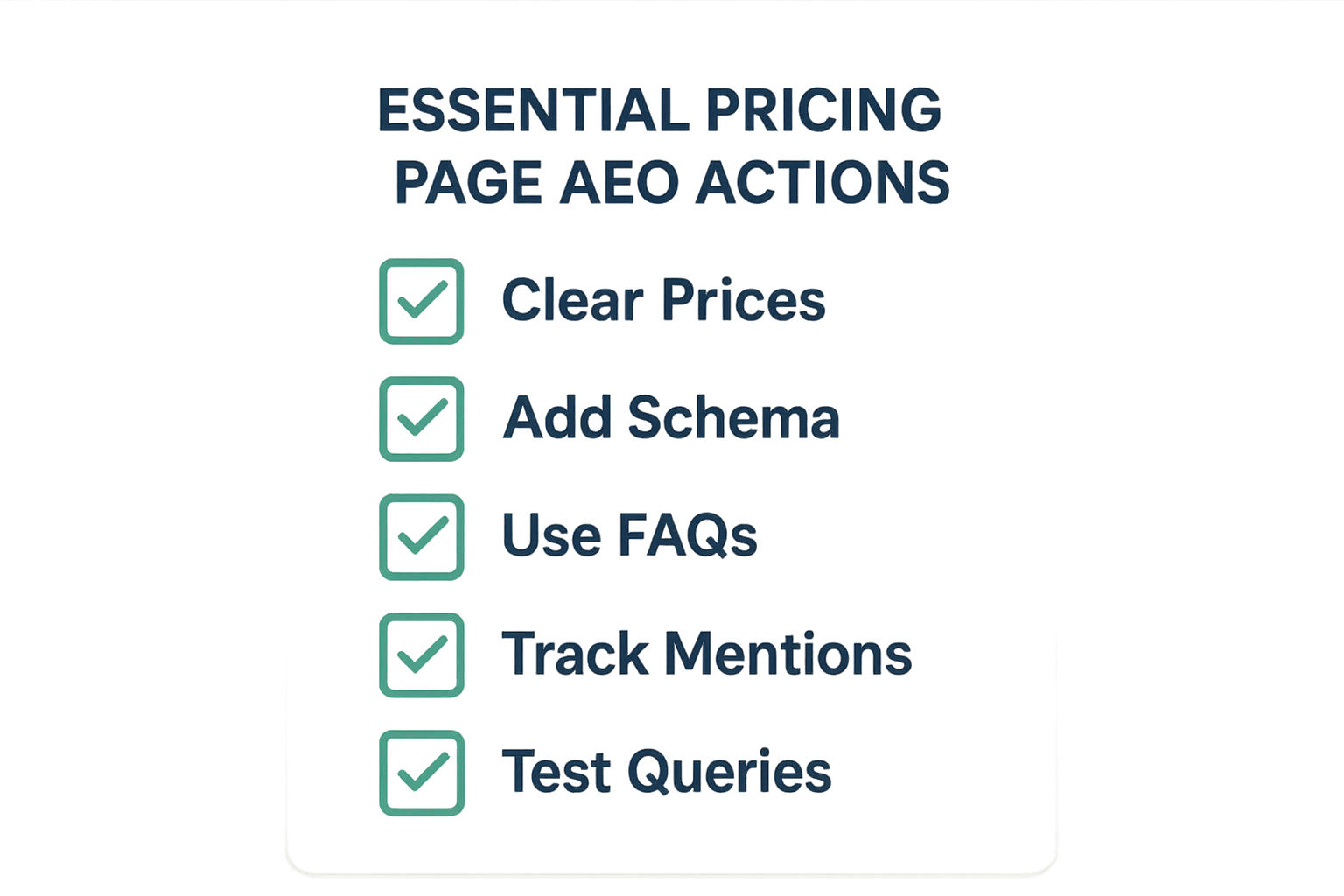
Use this checklist to verify your pricing page schema is AI-ready:
- [ ] Product or SoftwareApplication schema present
- [ ] Offer schema nested with price, priceCurrency (ISO 4217), availability
- [ ] PriceSpecification used (not bare price values)
- [ ] billingDuration specified for subscription products
- [ ] FAQPage schema with 5-7 pricing questions
- [ ] Schema validates in Google Rich Results Test
- [ ] Schema matches current live pricing (date-check against last price change)
Building the Pricing FAQ That Mirrors Buyer Queries
The Questions AI Is Actually Answering
The questions you include in your pricing FAQ should map directly to how buyers query AI assistants. These aren’t the questions your marketing team thinks are important – they’re the questions your sales team hears repeatedly, phrased the way buyers actually ask them.
Core questions to include:
- “How much does [product] cost?”
- “Is there a free plan or free trial?”
- “What’s the difference between [tier] and [tier]?”
- “Does [product] offer annual discounts?”
- “What’s included in the [tier] plan?”
- “Is there a setup fee?”
- “Can I change plans later?”
These questions mirror the exact Q&A shape AI systems try to produce. By pre-formatting the answers on your page, you’re giving AI exactly what it needs to cite you.
Answer Structure for Citation-Worthiness
Each FAQ answer should follow a specific structure optimized for extraction:
- Lead with the direct answer in the first sentence
- Follow with 2-3 sentences of supporting detail
- Close with a specific qualifier or condition if relevant
Target length: a 40-60 word core answer, with supporting detail after it if needed.
Example:
Q: “How much does [Product] cost?”
A: “[Product] pricing starts at $49/month for the Starter plan, billed annually. The Professional plan is $149/month and includes advanced analytics and priority support. Enterprise pricing is custom based on seat count and starts at $499/month for teams of 50+. All plans include a 14-day free trial with no credit card required.”
This answer is immediately quotable. AI can extract it cleanly, attribute it confidently, and include it in comparison queries.
Placement and Visibility
The FAQ should be visible on the pricing page itself – not hidden in a separate support section or buried in a help center. When AI crawls your pricing page, the FAQ should be there.
Placement: After tier details but above final CTA.
Heading hierarchy: Use an H2 for the “Pricing FAQ” section and an H3 for each question. The questions and answers must be visible on the page, with FAQPage schema that matches them word for word.
For more guidance on structuring FAQ content across your site, see our guide to FAQ pages for AEO.
What “Contact Sales” Vendors Are Losing
The Visibility Gap in Comparison Queries
When buyers ask AI “compare pricing for [category] tools,” AI can only cite vendors who publish pricing. There’s simply nothing to extract from “Contact Sales” pages.
I’ve watched competitor pricing pages get cited in queries about our clients’ categories simply because the competitor published a number and our client didn’t. The “Contact Sales” approach that felt premium five years ago now means you’re not in the conversation.
According to Forrester’s 2026 research, 94% of B2B buyers used AI during their most recent purchase, and 55% compared vendors in AI tools. If you’re invisible in those comparisons, you’re invisible to most of your potential buyers at the exact moment they’re building shortlists.
This isn’t about whether buyers prefer transparent pricing (they do). It’s about whether AI can include you in the answer when buyers ask comparison questions.
The Minimum Viable Transparency Approach
If you can’t publish exact pricing due to company policy or genuinely variable pricing models, you still have options:
Tier 1 – Publish ranges: “Starting at $X” or “$X-$Y depending on team size”
Tier 2 – Publish pricing factors: “Pricing based on: number of users, data volume, support tier”
Tier 3 – Publish what’s included: Detail what’s included at each general level, even without exact prices
Something citable beats nothing citable. AI can quote “Enterprise plans start at $10,000/year” but can’t quote “Contact us for pricing.”
The goal is giving AI enough to include you in the comparison. Perfect transparency isn’t required – but complete opacity is a visibility death sentence.
Transparency Elements That Build Trust With Buyers and AI
Price alone isn’t enough. The details around the price make it credible to buyers and safe for AI to repeat. A number with no context invites a hedged answer, or no answer at all.
Add these trust elements to your pricing page:
- What’s included and what isn’t: List deliverables per tier and name common exclusions (ad spend, third-party tools, work beyond scope).
- Contract terms: State the minimum commitment, renewal terms, and cancellation policy plainly.
- One-time fees: List setup, onboarding, or audit fees separately from recurring pricing.
- Pricing factors: What moves the price up or down, such as scope, number of locations, or channels managed.
- A visible “Pricing last updated” date: Shows the numbers are current and gives AI a freshness signal.
Each element answers a question buyers would otherwise save for a sales call, and each one gives AI another specific, attributable fact to cite.
Measuring Pricing Page AI Performance
Traffic Attribution for AI Referrals
Your analytics setup needs to track AI referral sources specifically. In GA4, create segments for visits from:
- ChatGPT (chatgpt.com)
- Perplexity (perplexity.ai)
- Microsoft Copilot (copilot.microsoft.com
Then filter for pricing page visits from these referrers specifically.
AI-referred traffic converts at 4-5x the rate of standard organic search in B2B SaaS (Pixis, 2026). The visitors arriving from AI citations are pre-qualified in ways traditional organic visitors aren’t. They’ve already asked the comparison question, and AI sent them to you.
Track these metrics:
– AI referral volume to pricing page (month-over-month trend)
– Conversion rate from AI referrals vs. other sources
– Assisted conversions where the pricing page was in the path
Citation Monitoring
Monthly, query your brand + “pricing” and competitor comparisons in ChatGPT, Perplexity, and Google AI Overviews.
Document:
– Are you being cited?
– Is the cited information accurate and current?
– Are competitors being cited instead?
Cited content averages 25.7% fresher than content that merely ranks organically (Ahrefs, 2026). Freshness signals matter for maintaining citations, which means your pricing page needs regular updates even if prices haven’t changed.
For a complete framework on tracking AI visibility across your site, see our guide to measuring brand visibility in ChatGPT, Perplexity, and AI.
The Metrics That Matter
Primary: AI referral traffic to pricing page (month-over-month trend)
Secondary: Citation presence in target comparison queries
Tertiary: Conversion rate from AI-referred pricing page visitors
Don’t expect massive volume. AI referrals are still a small share of total traffic for most B2B sites. But the intent quality is significantly higher. These are buyers actively comparing options
What Good Looks Like
The Optimized Pricing Page Anatomy
H1: Product name and “Pricing” clearly stated
First 300 words: Tier summaries with prices
Above the fold: Comparison table with feature-by-feature breakdown
Mid-page: Pricing FAQ section with 5-7 natural-language questions
Throughout: Complete schema stack (Product/SoftwareApplication + Offer + UnitPriceSpecification + FAQPage)
Supporting content:
– Clear billing terms (monthly/annual, what’s included, cancellation policy)
– Specific buyer-fit qualifiers for each tier (“Best for teams of X-Y”)
– Trust signals (logos, testimonials, security certifications)
What Changes in 30 Days
Week 1: Schema implementation and validation
– Implement Product/SoftwareApplication schema
– Add Offer and PriceSpecification markup
– Validate in Google Rich Results Test
Week 2: Content restructuring
– Rewrite opening to lead with pricing (BLUF format)
– Create self-contained tier summaries
– Build or improve comparison table
Week 3: FAQ section build-out
– Draft 5-7 FAQ answers from sales team input
– Implement FAQPage schema
– Place FAQ on pricing page itself
Week 4: Baseline measurement setup
– Configure GA4 AI referral tracking
– Run first AI citation audit across ChatGPT, Perplexity, Google AI Overviews
– Document current state for future comparison
After 30 days, monitor AI referral traffic trends and citation presence monthly.
For guidance on creating content that AI systems can cite across your entire site, see our complete guide to AI-ready content.
Making Pricing Page AEO Part of Your Strategy
The shift is clear: pricing pages aren’t just conversion assets anymore – they’re visibility assets in the AI search era. The vendors who publish clear, structured, quotable pricing information will be cited when buyers ask AI for comparisons. The vendors who hide behind “Contact Sales” will be invisible in those same queries.
Key Takeaways
- Pricing pages receive 3.5x their baseline traffic share from AI referrals (Gushwork AI, 2026) – yet most B2B companies leave them unoptimized
- Bottom-line-up-front structure is essential – 44.2% of AI citations come from the first 30% of page content (Anymorph AI, 2026)
- Schema markup creates the extraction pipeline – complete pricing schema correlates with up to 40% more AI Overview appearances (Stackmatix, 2026)
- FAQ schema on pricing pages is a citation multiplier– pages with FAQPage markup are 3.2x more likely to appear in AI Overviews (Frase.io, 2025)
- Something quotable beats nothing quotable – ranges and “starting at” figures work when exact pricing isn’t possible
Next Steps
- Audit your current pricing page against the schema checklist above
- Restructure content to lead with prices in the first 300 words
- Build your pricing FAQ using actual questions from your sales team
- Implement the full schema stack and validate before publishing
- Set up AI referral tracking in GA4 before your first optimization
- Run your first AI citation audit within 30 days of implementation
B2B pricing transparency stopped being optional when AI became the first stop in the buying journey. Your pricing page is either earning citations or losing them to competitors who showed up.
Ready to optimize your pricing page for AI visibility? Get a free growth plan and we’ll audit your current pricing page structure, schema implementation, and AI citation presence – then show you exactly what to fix first.
