
Expert Review SEO for AI Search: How SMEs Improve Trust and Quoteability

Here’s a stat that should stop you mid-scroll: 62% of enterprise brands remain invisible to AI search engines despite heavy SEO investment. They’ve published the content. They’ve optimized the keywords. They’ve built the backlinks. And yet, when someone asks ChatGPT or Perplexity for a recommendation in their category, they don’t exist.
I’ve been reviewing AI search results for clients obsessively over the past year, and one pattern keeps emerging. The brands that do get cited share something the invisible majority lacks, not better content, necessarily, but visible proof that experts actually validated it.
This is the gap most content teams miss entirely. Expert review happens in Google Docs comments. It happens in Slack threads. It happens in meetings where a subject matter expert says “this looks good” before the page goes live. Then that review disappears. The published content shows no trace that any expert ever touched it.
And here’s the problem: AI models have no way to know your content was reviewed by an expert if that review isn’t visible in the content itself.
The data backs this up. 96% of AI Overview citations come from sources with strong E-E-A-T signals (SatelliteAI, 2026). Meanwhile, only 38% of pages cited in AI Overviews also rank in Google’s top 10 (Ahrefs, 2026). This means expert review that builds visible trust signals can earn AI citations even without top organic rankings.
This article is the playbook for making SME involvement strategically visible for AI search. You’ll learn how to structure expert review so it shows up in content, the specific elements that improve trust signals for AI, and the workflow that makes SME involvement sustainable at scale.
Why AI Engines Care About Expert Review (And How They Evaluate It)
E-E-A-T has shifted from quality guideline to visibility filter. It’s no longer just about satisfying Google’s human quality raters during periodic reviews. It’s now the primary mechanism AI systems use to decide what’s safe to cite.
AI models are trained on massive datasets that include signals of authority, expertise, and trustworthiness. They’re not just checking if content is accurate. They’re looking for evidence that a human expert validated it. There’s a difference between content that happens to be correct and content that was verified by someone qualified to make that judgment.
The correlation data is striking. E-E-A-T signals correlate at r=0.81 with AI citation probability, while Domain Authority correlates at only r=0.18 (Launchcodex, 2026). This means the traditional SEO playbook where you build links and increase domain authority matters far less for AI visibility than demonstrating genuine expertise.
What do AI systems actually look for? The specifics reveal an important distinction. 67% of AI Overview cited content includes direct expert quotes, and 78% features numerical data with source attribution (Koanthic AI Visibility Study, 2026). These aren’t arbitrary content features. They’re the exact outputs of a rigorous expert review process.
I call this “corroborated trust.” AI engines cross-reference author credentials across platforms, looking for entity consistency. When your SME reviews content and their credentials appear on your page, on their LinkedIn profile, in industry publications, and on other authoritative sites, the trust signal compounds. Google added an ‘Authors’ section to Search Central documentation on February 1, 2026, signaling that authorship transparency is now a direct quality consideration (Google Search Central / Digital Applied, 2026).
Here’s what I’ve observed working with clients across industries: AI models are getting better at distinguishing between content that cites experts (external quotes pulled from other sources) and content validated by experts (internal SME review). Both create trust signals, but the latter is harder to fake. And AI engines reward what’s hard to fake.
The brands winning AI citations aren’t just hiring freelancers to write accurate content. They’re building systems that make their internal expertise machine-readable.
The Three Trust Signals Expert Review Creates
Expert review doesn’t just improve content quality in the abstract. It generates specific, measurable signals that AI systems are trained to recognize. Let’s break down the three categories.
Author Entity Signals
AI crawlers build entity profiles for authors across the web. When your SME reviews or authors content, their credentials become part of your page’s trust profile, but only if those credentials are visible.
Pages with visible author credentials are 41% more likely to earn AI citations than pages without them (AuthorityTech, 2026). Author credentials’ weight in AI citation decisions doubled from 8% to 16% between 2024 and 2025 (BrightEdge, 2025). This isn’t a nice-to-have anymore. It’s a core ranking factor for AI visibility.
But here’s what most brands get wrong: they add an author bio as an afterthought, buried in a footer with no connection to the author’s broader digital presence. That’s not how entity signals work.
For author entity signals to compound, AI systems need to see:
- Author bio with credentials – Not just a name, but specific expertise markers (certifications, years of experience, institutional affiliations)
- Links to author’s other published work – Guest posts, industry publications, conference presentations
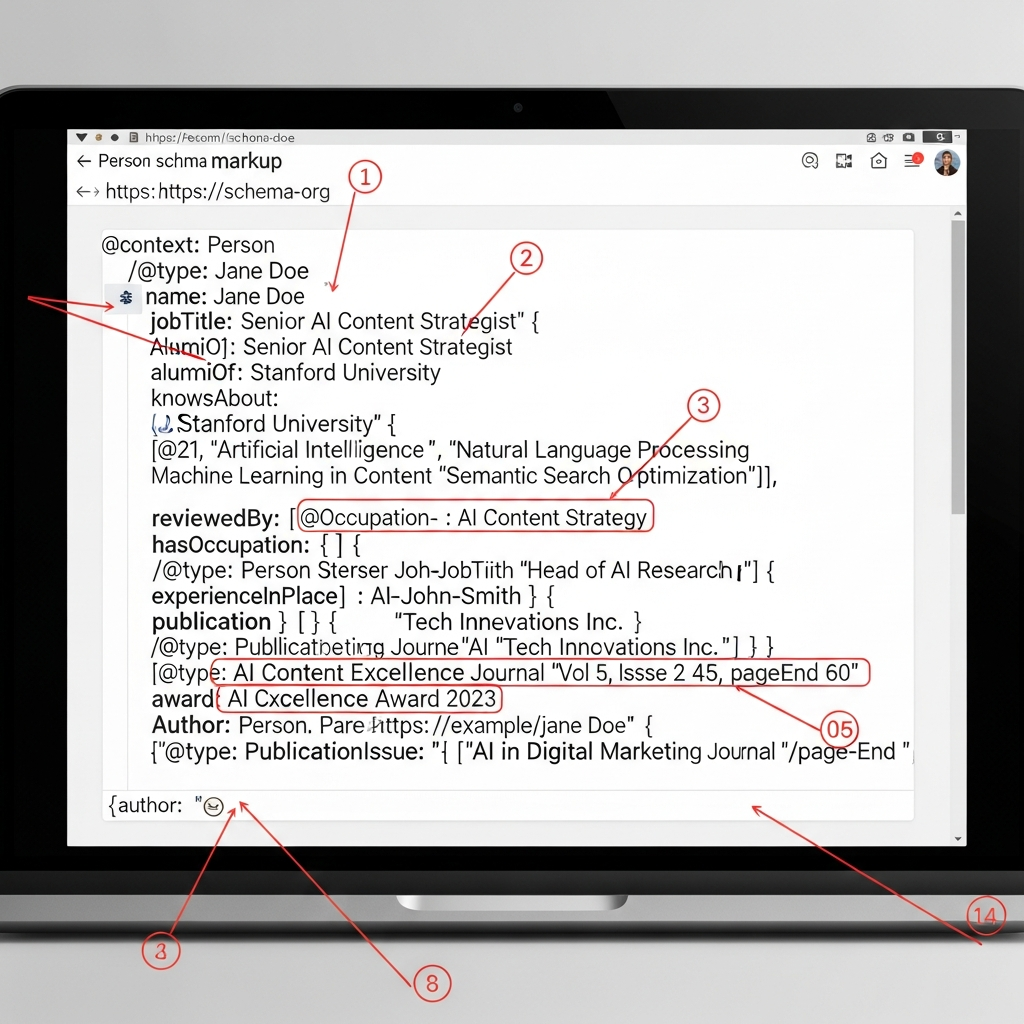
- Author schema markup – Person schema with name, jobTitle, worksFor, and knowsAbout properties
- Consistency across platforms – The same name, same credentials, same entity appearing on LinkedIn, your website, and external publications
This is a 6-12 month investment. AI crawlers and Knowledge Graph updates lag publication of new author signals by 3-6 months. Brands that started building author entities in 2025 are now reaping citation benefits. Brands starting now will see results in 2027. The best time to start was a year ago; the second best time is today.
Review Provenance Signals
This is the gap most brands miss completely: making the expert review process machine-readable. I call this “review provenance,” which is the visible trail that shows the review happened.
When your SME reviews content in Google Docs and approves it via Slack, that review exists only in your internal systems. The published page shows no evidence that any expert ever validated it. From an AI system’s perspective, the content could have been written by anyone.
Elements that signal review happened include:
- Review dates – “Last reviewed: [Date]” displayed prominently on the page
- Reviewer credentials – “Reviewed by [Name], [Title/Credentials]” with full attribution
- Methodology disclosure – How the review was conducted, what was verified
- Explicit “reviewed by” attribution – A distinct callout, not buried in fine print
Look at how health, legal, and finance sites handle this. Medical content sites display “Medically reviewed by [Name], MD on [Date]” in the header area. Financial advice pages show “Reviewed for accuracy by [Name], CFP.” Legal content includes “Reviewed by [Name], JD, licensed in [State].”
These industries figured out review provenance because regulatory pressure forced transparency. But the same transparency that satisfies compliance also satisfies AI trust signals. B2B brands, e-commerce companies, and SaaS providers should adopt identical patterns – not because they’re regulated, but because AI engines reward visible review infrastructure.
Quoteability Signals
AI engines look for content that’s safe to quote – content where the source of claims is clear and the phrasing is directly extractable. This is where expert review creates its most direct impact on citations.
Adding statistics to content boosted AI visibility by 41%, making it the single strongest optimization lever identified in the Princeton/Georgia Tech/IIT Delhi GEO Study (KDD 2024). But statistics alone aren’t enough. They need source attribution in the same sentence. They need context from an expert who can explain what the numbers mean.
Expert review improves quoteability by:
- Validating claims – Ensuring every statement can be defended if challenged
- Adding expert commentary – Direct quotes from the SME that AI can extract verbatim
- Ensuring source attribution – Every stat, every claim, every fact has a visible source
- Creating quotable summary statements – Sentences designed to be pulled directly into AI responses
Content with expert quotes and professional credentials sees 25-45% citation rate improvement compared to content without attribution (Averi AI Citation Benchmarks, 2026). The review process itself creates the raw material AI systems need to cite your content confidently.
| Signal Type | What AI Looks For | Where to Include It |
|---|---|---|
| Author Entity | Named expert, credentials, entity consistency | Author bio, schema markup, byline |
| Review Provenance | Review date, reviewer name, methodology | Header area, structured data, visible attribution |
| Quoteability | Direct quotes, attributed stats, clear sources | Body content, data tables, summary statements |
The SME Review Workflow That Actually Shows Up in Content
The gap between “content reviewed by experts” and “content that shows expert review” is operational. It’s not about whether your SMEs are involved but it’s about whether your workflow captures their involvement in a format that AI systems can parse.
I’ve watched content teams burn SME access on accuracy checks that produce no visible signals. The expert confirms the content is correct, the page publishes, and there’s no trace of that validation anywhere. That’s not a workflow problem. That’s a strategic failure.
This workflow is designed to respect expert time while creating visible review signals that compound your AI citation probability.
Step 1: Define What Reviewers Actually Contribute
Most SME briefs are vague. “Please review this for accuracy” is the standard ask. The SME scans the content, notes any factual errors, and sends it back. That’s accuracy review. It creates no visible signals.
What you need is contribution review – review that produces quotable expertise.
The distinction matters: Accuracy review asks “Is this correct?” Contribution review asks “What can you add that makes this uniquely authoritative?”
Your SME brief should include specific asks:
- “Add one direct statement we can quote with your name attached”
- “Flag any claims that need source citation, and provide the source”
- “Where can you add a specific example from your experience?”
- “What’s the most important thing readers should understand that isn’t already in this draft?”
The output is a clear brief that tells SMEs exactly what you need from them. Not “please review” or “please contribute something quotable.”
Step 2: Capture Expert Contributions in Quotable Format
This is where most workflows fail. The SME provides feedback, the content team incorporates it, and the expert’s actual words disappear into the revision.
Train your content team to extract SME feedback as direct quotes, not just edits.
Here’s the pattern: SME says “this section is wrong because X.” Content team rewrites the section AND adds “According to [SME Name], [Credentials], ‘[direct quote about X].'”
This is review extraction – turning the review process into content. Every correction, every addition, every clarification from your SME is a potential quotable attribution.
Template for capturing SME contributions:
“[SME Name], [Title/Credentials], explains: ‘[Direct quote from review feedback]'”
If your SME reviews content and notes “The biggest mistake companies make here is underestimating implementation time,” that’s not just feedback to incorporate. That’s a quotable statement that should appear in the published content with full attribution.
The goal is that by the time content publishes, it includes at least one directly attributed quote from the reviewing expert. That quote creates a visible signal that expert review happened.
Step 3: Make Review Dates and Credentials Visible
Every piece of content should display three elements:
- Last reviewed date – Not just “published date,” but when an expert last validated it
- Reviewer name – The specific person who conducted the review
- Reviewer credentials – What qualifies them to review this content
This isn’t just good practice, it’s a trust signal AI engines actively look for.
The placement matters. Review attribution should appear in the header area or immediately after the title, not buried in a footer. AI crawlers weight content that appears early on the page more heavily.
Example implementation:
Published: March 15, 2026
Reviewed by: Sarah Chen, VP of Product Marketing (12 years B2B SaaS experience)
Last updated: July 1, 2026
Include schema markup for review dates and reviewer credentials. While there’s no official “reviewedBy” schema property, you can include reviewer information in your Person schema for the author, or add a secondary author with reviewer designation.
Step 4: Update the Review, Not Just the Content
AI rewards content freshness, but freshness means an updated review, not just updated text. This is where sustainable SME involvement becomes critical.
When you refresh content, have the SME re-review and update the review date. Even if the content itself didn’t change substantially, a fresh review date signals ongoing validation. AI systems parse these dates as recency signals.
Build review cycles into your content calendar:
- News content and rapidly changing topics: Monthly review
- Evergreen guides and how-to content: Quarterly review
- Pillar pages and cornerstone content: Semi-annual review
The 68% of sites with E-E-A-T signals that gained rankings after Google’s March 2026 core update didn’t just have expert attribution; they had fresh expert attribution (AI Growth Agent, 2026). Meanwhile, 41% of AI-only sites lost traffic.
SME Review Workflow Checklist:
- [ ] Brief SMEs with specific contribution requests (not just “please review”)
- [ ] Extract at least one quotable statement per review
- [ ] Capture SME’s full name and credentials for attribution
- [ ] Display “Reviewed by [Name], [Credentials]” on published page
- [ ] Add review date and update it with each content refresh
- [ ] Implement schema markup for author and review metadata
- [ ] Schedule review cycles by content type (monthly/quarterly/semi-annual)
Structuring Content So Expert Review Is Machine-Readable
Making expert review visible is necessary but not sufficient. AI engines parse content looking for specific patterns, and structure determines whether your trust signals get recognized or ignored.
This section covers the formatting that makes expert review visible to crawlers. The goal is to move from “expert review happened” to “expert review is machine-readable.”
Author Attribution That AI Engines Can Parse
Where you place author attribution matters as much as what you include. AI crawlers weight content that appears early on the page more heavily, and author information buried in footers often gets deprioritized.
Placement rules:
- Author bio should appear above the content or immediately after the opening section
- Reviewer attribution should appear in the header area, near the publication date
- Author credentials should be visible without scrolling on desktop
Author schema markup implementation:
Your Person schema should include specific properties that AI systems use to build entity profiles:
Person Schema Properties:
- name: Full name as it appears across platforms
- jobTitle: Current professional title
- worksFor: Organization with matching schema
- knowsAbout: Topic areas of expertise
- sameAs: Links to LinkedIn, industry profiles, author pages
Cross-reference with external profiles. The more places AI systems can verify your author’s credentials, the stronger the entity signal. Link to the author’s LinkedIn profile, their author pages on other sites, and any industry publications where they’ve contributed.
I’ve seen author bios that include credentials but link nowhere. That’s a missed opportunity. Every external validation point strengthens the entity signal.
Review Metadata in Structured Data
Use schema.org markup to signal review information programmatically. While the full semantics depend on your content type, several approaches work:
For article content:
Include dateModified with your most recent review date. Add the reviewer as a secondary author with their credentials in the schema. If using Review schema (for product reviews or similar), include reviewedBy where applicable.
For how-to and educational content:
HowTo schema supports author properties that can include reviewer information. The dateModified property signals freshness when an expert review updates the content.
Schema implementation notes:
- Update
dateModifiedevery time an SME re-reviews content, even if the body text doesn’t change substantially - Include credentials in the
descriptionfield of Person schema when jobTitle alone doesn’t convey expertise - Use consistent entity references (same name format, same organization) across all your content’s schema
Content Formatting for Quoteability
AI engines favor content with clear, extractable statements. The formatting choices you make determine whether your expert’s contributions are quotable or buried in prose.
Formatting patterns that improve quoteability:
- Direct quotes in quotation marks with attribution – “According to [Name], ‘[quote].'” format allows direct extraction
- Statistics with source citation in the same sentence – “Conversion rates increased 41% (Industry Study, 2026)” is extractable; the same stat without attribution is not
- Summary statements at the start of sections – What I call the “quotable lead,” a single sentence that captures the key insight before elaboration
- Data tables with clear headers and source notes – Structured data formats are more parseable than prose
78% of AI Overview cited content features numerical data with source attribution (Koanthic AI Visibility Study, 2026). Format your stats to be quotable – source and context in the same breath.
When your SME reviews content and adds a correction or insight, format it for extraction. “This approach fails because X” becomes “[SME Name] notes that this approach fails because X.”
Building Expert Entity Signals Beyond Your Site
Your expert review is only as strong as your experts’ external presence. AI systems cross-reference author credentials across the web, building entity profiles from multiple sources. A reviewer whose credentials exist only on your site generates weaker signals than a reviewer with established authority across platforms.
Brand mentions correlate 3x more strongly with AI visibility than backlinks, 0.664 vs 0.22 (Multiple studies cited by Launchcodex, 2026). This means your SMEs’ off-site presence directly impacts your content’s citation probability.
The Expert Entity Checklist
Building SME entities requires systematic attention to off-site signals:
LinkedIn profile optimization:
– Credentials visible in headline and summary
– Company linked correctly
– Expertise areas explicitly stated
– Publishing activity that demonstrates ongoing thought leadership
Author pages on your site:
– Dedicated page for each SME who reviews content
– Bio with full credentials and expertise areas
– Links to all content they’ve authored or reviewed
– External links to their other published work
Guest contributions on industry publications:
– Bylined articles that establish expertise
– Quotes in roundup posts and expert interviews
– Conference presentations and webinar appearances
– Podcast guest spots
Earned media mentions:
– Press mentions and interviews
– Industry award recognition
– Analyst report citations
– Trade publication features
Consistency across all platforms:
– Same name format (Peter Palarchio, not “Peter P.” on some sites and “P. Palarchio” on others)
– Same credentials language
– Same expertise positioning
– Same professional photo where possible
Why This Matters for AI Citation
AI Knowledge Graphs are built from cross-platform entity signals. When your SME reviews content, and their entity is well-established across the web, the review signal is stronger. The AI system can verify that the person reviewing your content is a real expert with documented credentials.
This is the competitive moat. Authentic expert involvement creates signals competitors cannot easily replicate. Anyone can hire a freelancer to write accurate content. Few brands have established SMEs with verified expertise who actively review and contribute to content.
The brands that started building SME entities in 2024 and 2025 are now seeing their content cited preferentially by AI systems. They invested in something that compounds: entity authority that transfers to every piece of content their experts touch.
For more on building author presence for AI search, see our guide on author pages, E-E-A-T, and AI search visibility.
Measuring Whether Your Expert Review Strategy Is Working
You’ve built the workflow, structured the content, and invested in SME entities. Now, how do you know it’s paying off?
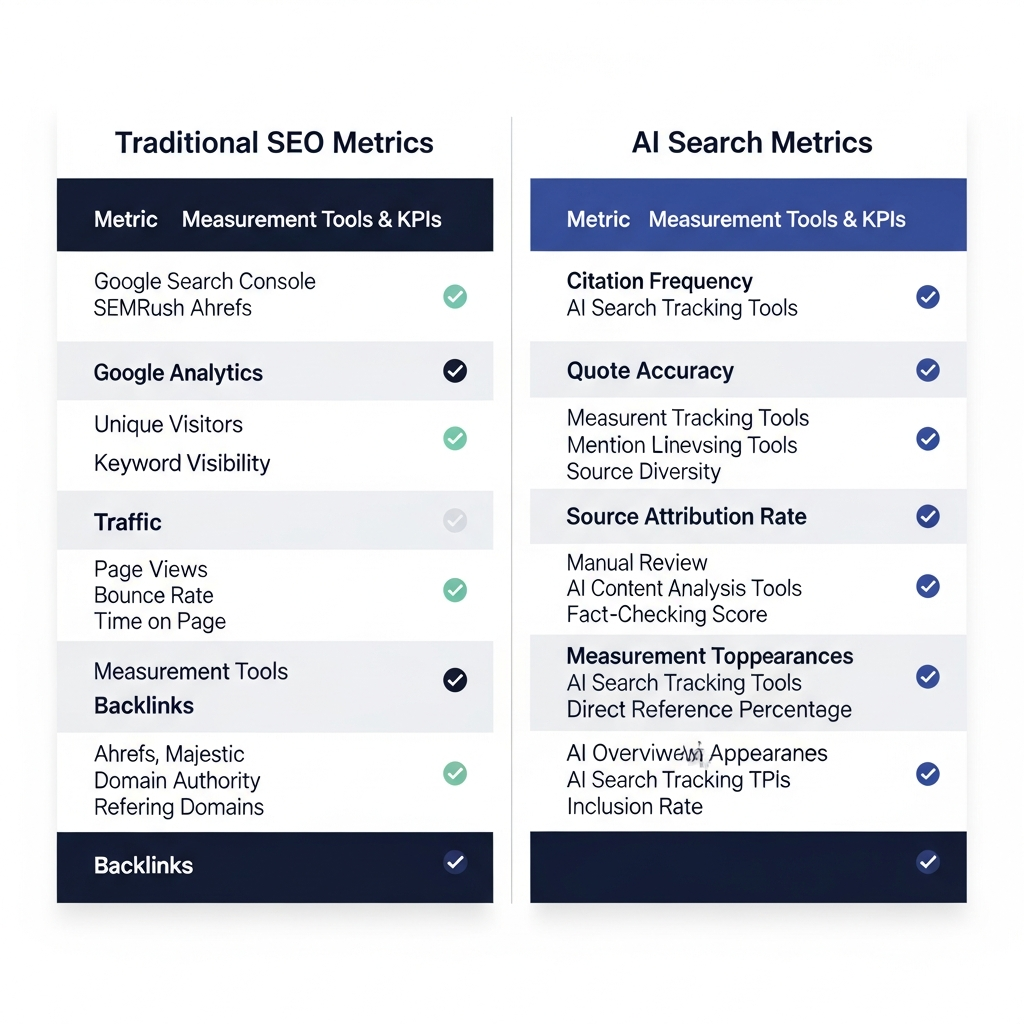
Traditional SEO metrics won’t capture this. Rankings don’t correlate strongly with AI citations with only 38% of AI-cited pages also rank in Google’s top 10 (Ahrefs 2026) 10. You need AI-specific measurement.
Metrics to Track
AI citation tracking:
Query your target topics in ChatGPT, Perplexity, and Google AI Overviews. Is your content cited? Is it attributed to your brand or your expert? Track this weekly for your priority topics. For a systematic approach to this measurement, see our AI visibility audit guide.
Citation rate by content type:
Compare citation rates for content with visible expert review (reviewer name, credentials, and review date displayed) versus content without. This A/B comparison reveals the direct impact of review provenance signals.
Author entity growth:
Track your SMEs’ presence in Knowledge Graph and AI entity databases over time. Search for their names in ChatGPT and note whether they’re recognized as authorities in your topic areas.
Review freshness:
Monitor what percentage of your content has a review date within the last 90 days. Stale review dates signal outdated content to AI systems.
What Success Looks Like
When your expert review strategy is working, you’ll see specific outcomes:
- Your content is cited by AI engines with attribution to your brand or expert
- Citation rate improves after implementing visible review signals (25-45% improvement is achievable) (Averi AI Citation Benchmarks 2026)
- Your SMEs’ names appear in AI-generated responses as trusted sources
- Content with visible review signals outperforms content without in both AI citations and traditional search
The brands winning AI search aren’t just creating more content. They’re making their expertise infrastructure visible and machine-readable. That’s the strategic shift.
For more on measuring AI search performance, see our AI SEO KPIs framework for zero-click search environments.
What to Do This Week
Stop reading and start auditing. Here’s your immediate action plan:
First action: Audit your top 10 content pieces.
Pull your highest-traffic pages and your most strategically important content. For each one, answer: Does it display a reviewer name? Does it show reviewer credentials? Does it include a review date? If the answer to any of these is no, that’s your first fix.
Second action: Brief your SMEs with the new contribution format.
Create a template brief that asks for quotable statements, not just accuracy checks. Send it to your next SME review with specific asks: “Add one statement we can attribute to you directly” and “Identify any claims that need source citations.”
Third action: Implement author schema markup.
Pick one piece of content. Add Person schema for the author with full credentials, worksFor, and knowsAbout properties. Add dateModified with the most recent review date. Monitor AI citations for that page over the next 60 days.
Fourth action: Build your SME entity checklist.
For each subject matter expert who reviews content, audit their external presence. LinkedIn profile optimized? Author page on your site? Guest contributions anywhere? Start filling the gaps.
The expert review most brands do is invisible. It happens in comments, Slack, and meetings, then disappears. If the review process doesn’t show up in the published content, AI models have no way to know it happened.
Make it visible. Make it machine-readable. Make it sustainable.
That’s how you become citable.
Ready to audit your content’s AI search visibility? Get a free growth plan and discover where your expert review signals are missing and how to fix them.
