How to Get ChatGPT to Cite Your Brand: The Playbook for AI Visibility
Brand mentions correlate 3x more strongly with AI visibility than backlinks (Ahrefs, 2025).
Let that sink in for a moment. According to a comprehensive study of 75,000 brands by Ahrefs (December 2025), the correlation between brand web mentions and AI visibility is 0.664, while the backlink correlation is just 0.218. For marketing leaders who have spent the past 15 years building link acquisition programs, this finding represents a fundamental shift in how authority is measured and rewarded.
The stakes are higher than ever. Gartner predicts traditional search engine volume will drop 25% by 2026 due to AI chatbots and virtual agents (Gartner, 2024). If your brand isn’t being cited by ChatGPT, Perplexity, and Google AI Overviews, you’re becoming invisible to a growing share of your buyers.
This article delivers what most GEO content fails to provide: a quantified, threshold-based framework for getting ChatGPT to cite your brand. Not vague “be authoritative” advice, but specific milestones, correlation data, and tactical playbooks drawn from the latest research and our experience working with enterprise brands at NAV43.
We’ll cover the exact referring-domain thresholds that trigger jumps in citation rates, why YouTube mentions outperform every other visibility factor, and how the February 2026 ChatGPT ads launch changed the citation landscape.
One critical reality to acknowledge upfront: only 30% of brands remain visible in back-to-back AI responses for the same query (AirOps, 2026). This isn’t a one-time optimization. It’s an ongoing investment in brand authority that compounds over time.
Why Your Domain Authority Doesn’t Guarantee ChatGPT Will Cite You
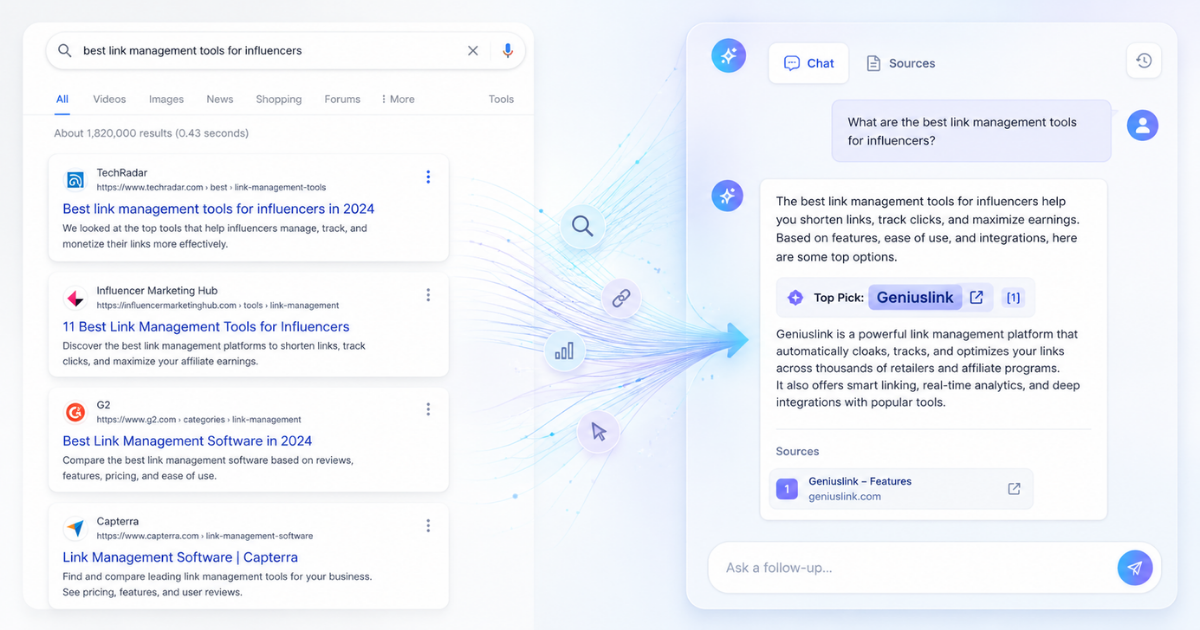
Here’s the fundamental disconnect most enterprise SEO teams face: Google evaluates pages through link graphs, but LLMs evaluate content through patterns in training data. You’re optimizing for the wrong system.
Google’s algorithm treats backlinks as votes of confidence. The more authoritative sites linking to you, the higher you rank. This model has driven SEO strategy for two decades. But ChatGPT doesn’t parse hyperlink structures the way Googlebot does. It processes raw text, identifying patterns, entities, and authority signals from the content itself, not the link pointing to it.
The “dark query” phenomenon compounds this challenge. Research suggests a significant majority of ChatGPT prompts don’t appear in traditional keyword tools. You simply cannot keyword-optimize for queries you can’t see. The conversational, multi-turn nature of AI interactions creates query combinations that never appear in search volume data.
There’s another layer to this problem. ChatGPT uses web search for only 34.5% of queries, down from 46% in 2024 (CXL, 2025). That means two-thirds of prompts are answered from training data alone. If your brand wasn’t well-represented in the training corpus, or if your content isn’t structured for AI extraction, you won’t appear even when users ask directly relevant questions.
The NAV43 75/25 Rule captures this reality. Based on our analysis of citation patterns across enterprise clients, approximately 75% of citation factors are off-site, including brand mentions, link diversity, review platform presence, and community discussions. Only 25% are on-page factors you directly control. Most brands are pouring resources into the 25% while ignoring the 75% that actually moves the needle.
The Mention-Source Divide: Being Cited vs. Being Recommended
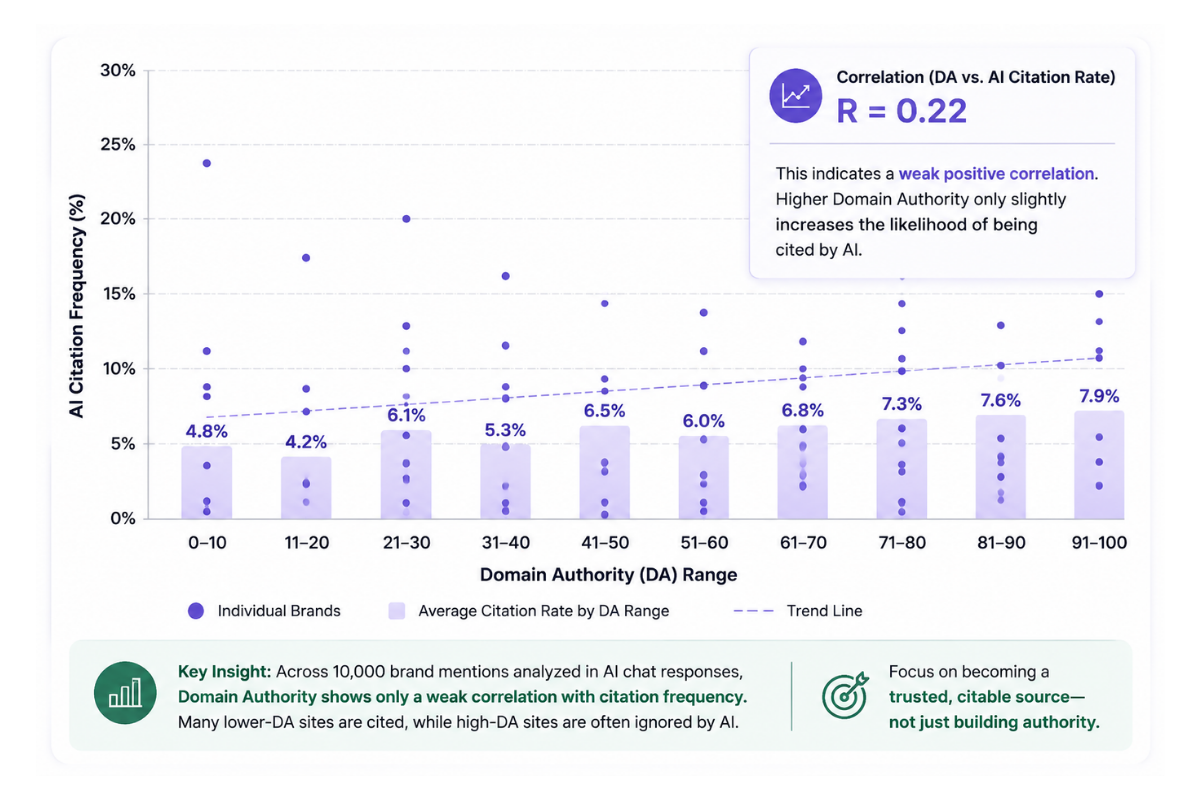
There’s a critical distinction most GEO discussions miss: being cited as an informational source versus being recommended as a solution.
Informational citations look like this: “According to [Brand], the average enterprise deal cycle is 47 days…” Your brand appears as a data source, building awareness and credibility.
Solution recommendations look like this: “For enterprise CRM needs, consider [Brand], which offers…” Your brand appears as a recommended product or service, directly driving the pipeline.
Both matter, but the tactics differ. Informational citations require authoritative, data-rich content that AI systems can quote. Solution recommendations require third-party validation, review platform presence, and community consensus.
Here’s the key insight: brands are 6.5x more likely to be cited through third-party sources than their own domains (AirOps, October 2025). This explains why review platforms, industry publications, and community discussions carry so much weight. AI systems place more trust in external validation than in self-promotion.
The rest of this article covers tactics for both citation types, but keep this distinction in mind. If you’re focused on thought leadership, optimize for informational citations. If you’re focused on the pipeline, optimize for solution recommendations.
The Threshold Effect: When Citation Rates Actually Jump
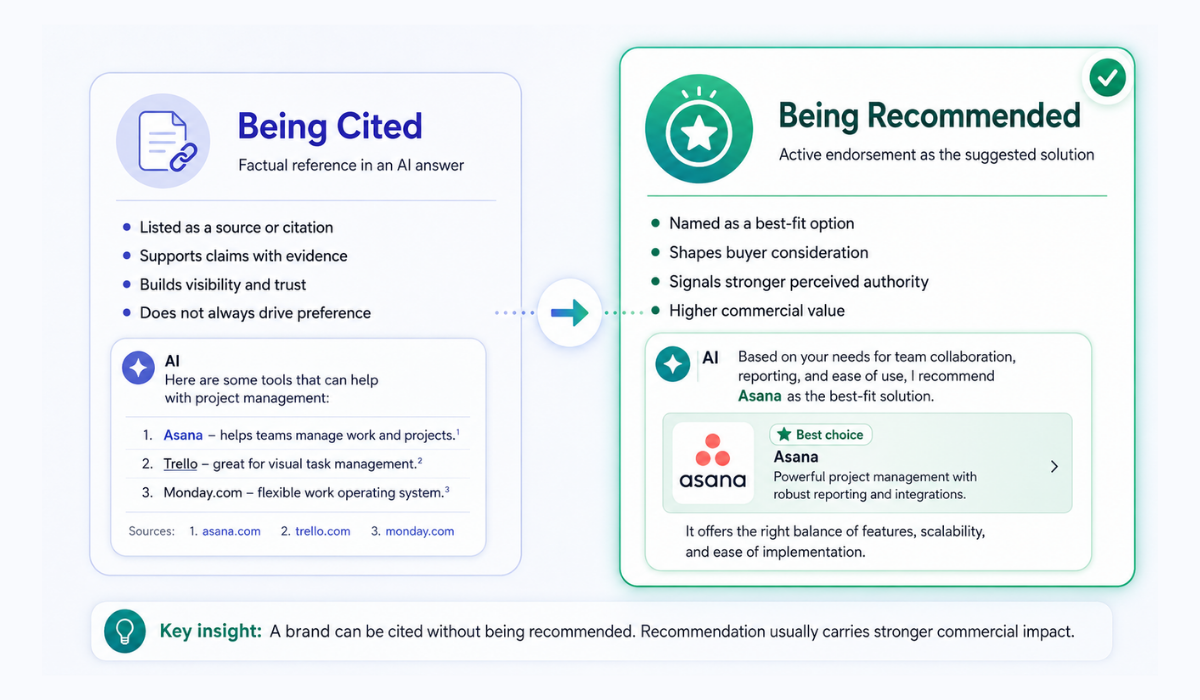
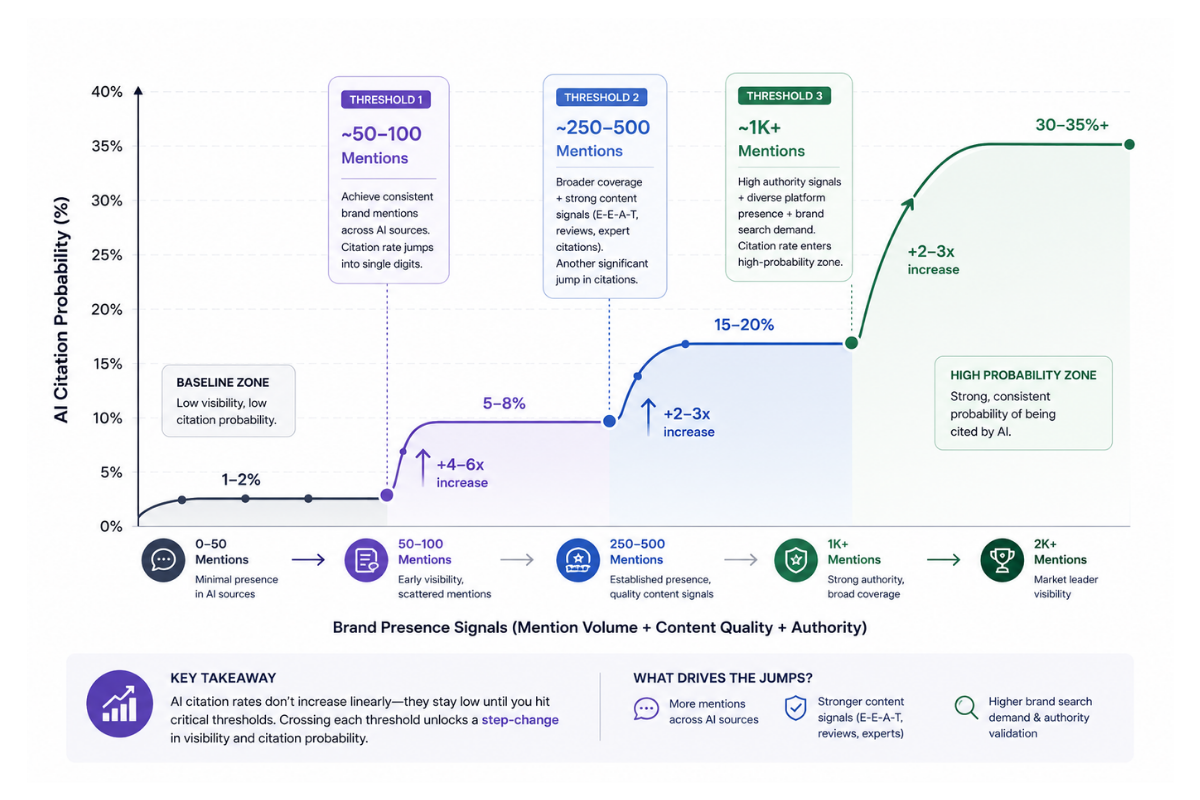
One of the most actionable findings in recent GEO research is the threshold effect: citation rates don’t improve linearly with authority signals. They jump at specific thresholds, creating clear, measurable milestones.
Referring domain threshold: Sites with 32,000+ referring domains are 3.5x more likely to be cited by ChatGPT than those with up to 200 referring domains (SE Ranking, November 2025). This isn’t a gradual improvement curve. It’s a step function. Brands below the threshold see minimal citation rates; brands above it see dramatically higher visibility.
For enterprise brands, this validates the value of your existing domain authority while revealing the specific benchmark to target. If you’re at 15,000 referring domains, you have a concrete goal. If you’re at 40,000, you’ve cleared the threshold and should focus on other factors.
Traffic threshold: The research also shows that 190K+ monthly visitors correlates with significantly higher citation rates. Brand size signals trustworthiness to AI systems. Larger brands are mentioned more frequently in the training data, creating a compounding authority effect.
The enterprise advantage is real, but conditional. Brands with an established web presence have a head start. But domain authority alone doesn’t guarantee citations. You still need to optimize for AI-specific factors, which we’ll cover in the following sections.
NAV43 Threshold Benchmarks for AI Visibility
– 32K+ referring domains: 3.5x citation rate vs. sub-200 domains (SE Ranking, 2025)
– 190K+ monthly visitors: correlated with significantly higher citation rates
– 3+ review platform profiles: 3x higher citation chances (SE Ranking, 2025)
– Wikipedia presence: access to 7.8% of all ChatGPT citations (Profound, 2025)
The Platform Presence Multiplier
Review platforms create a compounding effect that many B2B brands underestimate.
Domains with profiles on platforms like Trustpilot, G2, Capterra, and Sitejabber have a 3x higher chance of being cited by ChatGPT (SE Ranking, November 2025). This isn’t about collecting reviews for social proof. It’s about creating structured, third-party validation that AI systems recognize as trust signals.
For B2B brands, G2 and Capterra profiles aren’t just lead generation tools. They’re citation amplifiers. AI systems use these platforms to validate brand legitimacy, especially for solution recommendations. When a user asks ChatGPT, “What’s the best CRM for mid-market companies?” the AI draws on review data from review platforms to populate its recommendations.
Profile completeness matters more than review count. Ensure every field is filled, product descriptions are detailed, categories are accurate, and feature lists are comprehensive. A complete profile on three platforms outperforms a thin profile on ten.
This connects directly to the 75/25 Rule. Review platform optimization is part of the 75% off-site work that most brands neglect while obsessing over on-page factors.
Brand Mentions Are the New Backlinks: How to Build AI-Visible Authority
Let’s return to the headline stat: brand web mentions correlate at 0.664 with AI visibility, compared to 0.218 for backlinks (Ahrefs, 2025). This is a 3x difference.
The mechanism is straightforward. AI systems train on raw text, not hyperlink graphs. When your brand is mentioned, whether or not there’s a link, that mention becomes part of the training data that shapes how AI understands and references your brand. Unlinked mentions carry weight they never did in traditional SEO.
Wikipedia’s role is particularly significant. Wikipedia is ChatGPT’s most-cited source, accounting for 7.8% of total citations (Profound, 2025). If your brand has a Wikipedia page, it’s a high-value asset for AI visibility. If not, third-party Wikipedia mentions, such as appearing in articles about your industry, competitors, or technology category, still contribute to citation patterns.
For enterprise brands, market presence creates natural mention density. You’re discussed on earnings calls, in industry reports, at conference presentations, and in trade publications. But strategic mention-building can accelerate what organic presence provides.
Where to Build Brand Mentions for Maximum AI Impact
Based on correlation data and the SE Ranking findings, here’s a prioritized framework for mention-building:
Tier 1: Highest Citation Impact
– Wikipedia: Direct page or mentions in related articles
– Major news outlets: WSJ, Forbes, Bloomberg, Reuters, TechCrunch
– Industry analyst reports: Gartner, Forrester, IDC, McKinsey
Tier 2: Strong Citation Signals
– Industry publications: Trade journals, vertical-specific media, association publications
– Review platforms: G2, Capterra, Trustpilot, Sitejabber (complete profiles, not just existence)
– Academic and research sources: University studies, peer-reviewed journals, conference proceedings
Tier 3: Supporting Mention Density
– Community platforms: Reddit and Quora mentions in contextually relevant threads
– Podcasts and webinars: Especially those that publish transcripts or video
– Conference coverage: Event recaps, speaker profiles, presentation summaries
Earned media is the highest-leverage activity here. PR placements in Tier 1 and Tier 2 sources create the text corpus that AI systems train on. A single mention in a Forbes article about your industry creates more citation potential than dozens of blog backlinks.
Community platforms deserve special attention. AI systems heavily index Reddit and Quora for topical authority signals (SE Ranking’s Quora/Reddit data). When your brand is mentioned positively in relevant subreddits or Quora threads, it contributes to how AI systems understand your market position.
The Surprise Leader: Why YouTube Mentions Outperform Every Other Factor
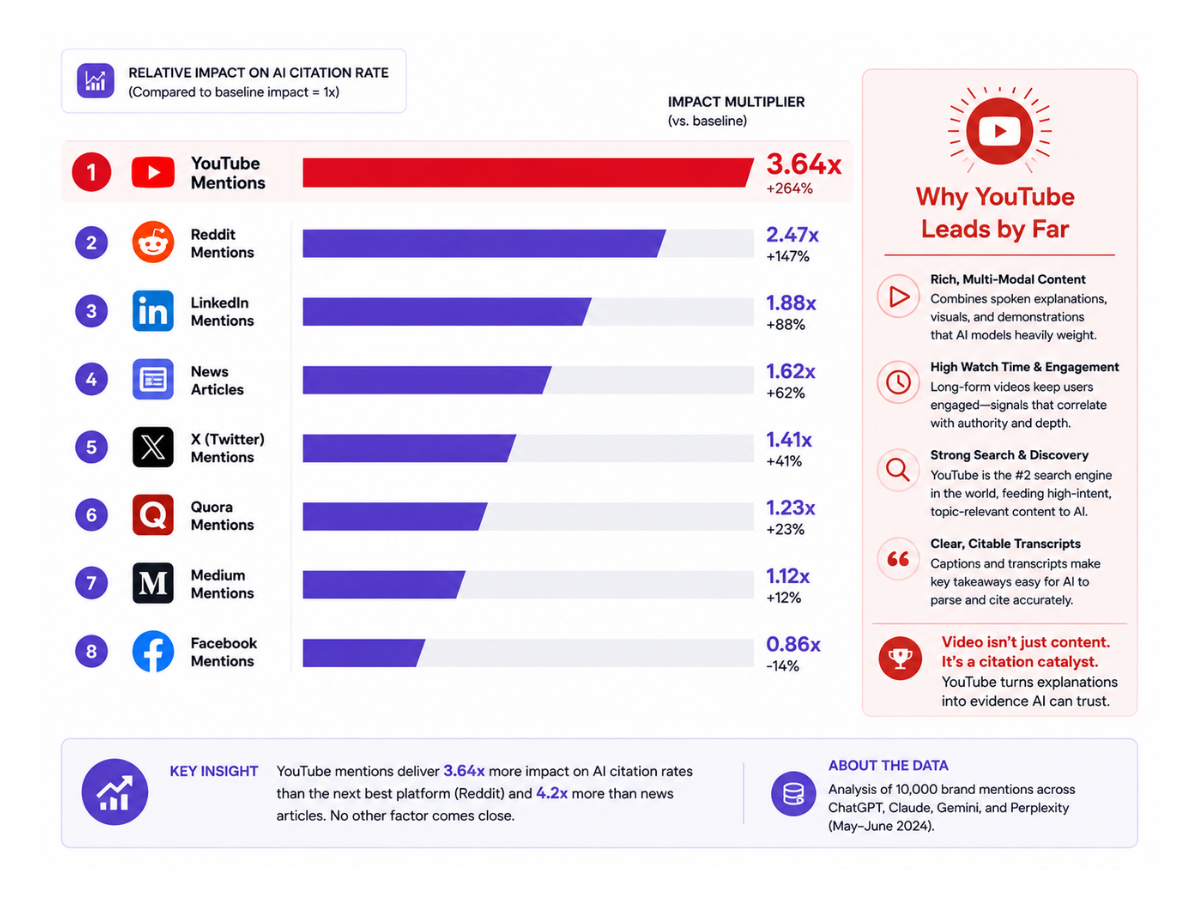
Here’s the finding that should reshape your GEO strategy: YouTube mentions show the strongest correlation with AI visibility at 0.737, outperforming every other factor across ChatGPT, AI Mode, and AI Overviews (Ahrefs, December 2025).
Most GEO strategies ignore video entirely, focusing on text-based content optimization. That’s a mistake.
The mechanism: YouTube transcripts are indexed and used in AI training data. Brands mentioned in video transcripts gain citation signals that pure text content can’t replicate. Video content creates mention density in a format that AI systems weigh heavily.
The strategic implication is counterintuitive. You don’t need a massive YouTube channel. You need to be mentioned in channels that already have authority. Creating content and being featured are different strategies with different resource requirements.
How to Get Your Brand Mentioned in YouTube Content
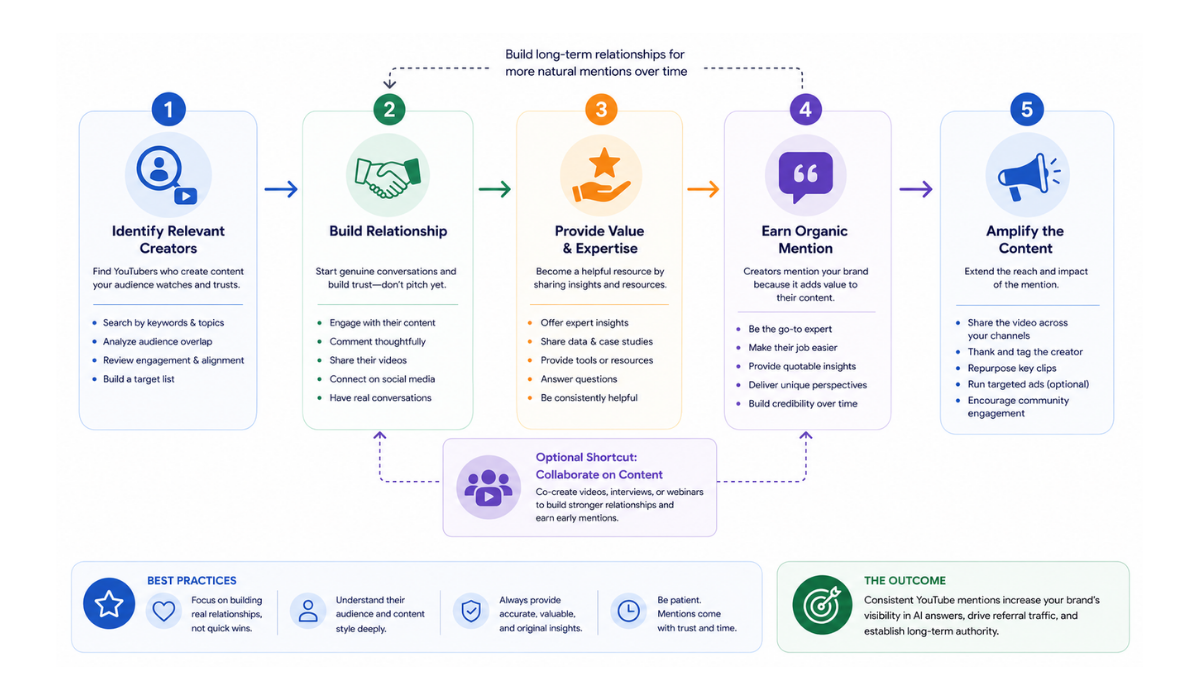
Influencer and creator partnerships: Sponsor videos in your industry vertical that mention your brand by name and describe it in context. A sponsored segment in a channel with 100K subscribers creates a transcript mention that outweighs dozens of blog backlinks for AI citation purposes.
Podcast video formats: Most B2B podcasts now publish video versions to YouTube. Guest appearances create transcript mentions across both audio and video platforms. Prioritize podcasts with YouTube distribution.
Comparison and review videos: These are high-intent content where brands are mentioned repeatedly and in context. If independent creators are making comparison videos in your category, ensure they include your brand. Product seeding, media outreach, or affiliate relationships can facilitate this.
Webinar recordings: When published to YouTube with optimized transcripts, your own webinars create mention density. The key is ensuring transcripts are accurate (auto-generated transcripts often mangle brand names) and that your brand is mentioned naturally throughout.
Transcript optimization matters. Ensure brand mentions appear in the first two minutes, where AI systems weigh content most heavily. Repeat mentions naturally throughout the video. Avoid having all brand mentions clustered at the end, where they carry less weight.
If you’re a B2B SaaS brand, consider this: a single guest appearance on a relevant podcast that publishes to YouTube with 50K subscribers creates a transcript mention that compounds over time as AI systems continue to index video content.
This is one of the most underexplored opportunities in AI content strategy. Brands focusing exclusively on text are missing the highest correlation factor.
On-Page Optimization for AI Citations: The 25% That Still Matters
While off-site factors dominate, on-page optimization still accounts for 25% of citation potential. And it’s the lever you control directly.
The peer-reviewed GEO research from Princeton, Georgia Tech, and IIT Delhi (published at KDD 2024) provides specific data: adding statistics to content (Princeton/Georgia Tech/IIT Delhi, 2024)t improves AI visibility by 41%, while fluency optimization improves it by 15-30%.
The answerable content principle drives on-page AI optimization. AI systems extract concise, quotable passages to include in responses. Content structured with clear questions and 2-3 sentence answers is more citable than narrative prose.
Freshness is non-negotiable. Pages that go more than three months without an update are 3x more likely to lose AI visibility. Over 70% of AI-cited pages were updated within the past 12 months (AirOps, 2026). ChatGPT shows the strongest preference for new content, citing URLs 393-458 days newer than comparable Google results.
The NAV43 AI-Citable Content Checklist
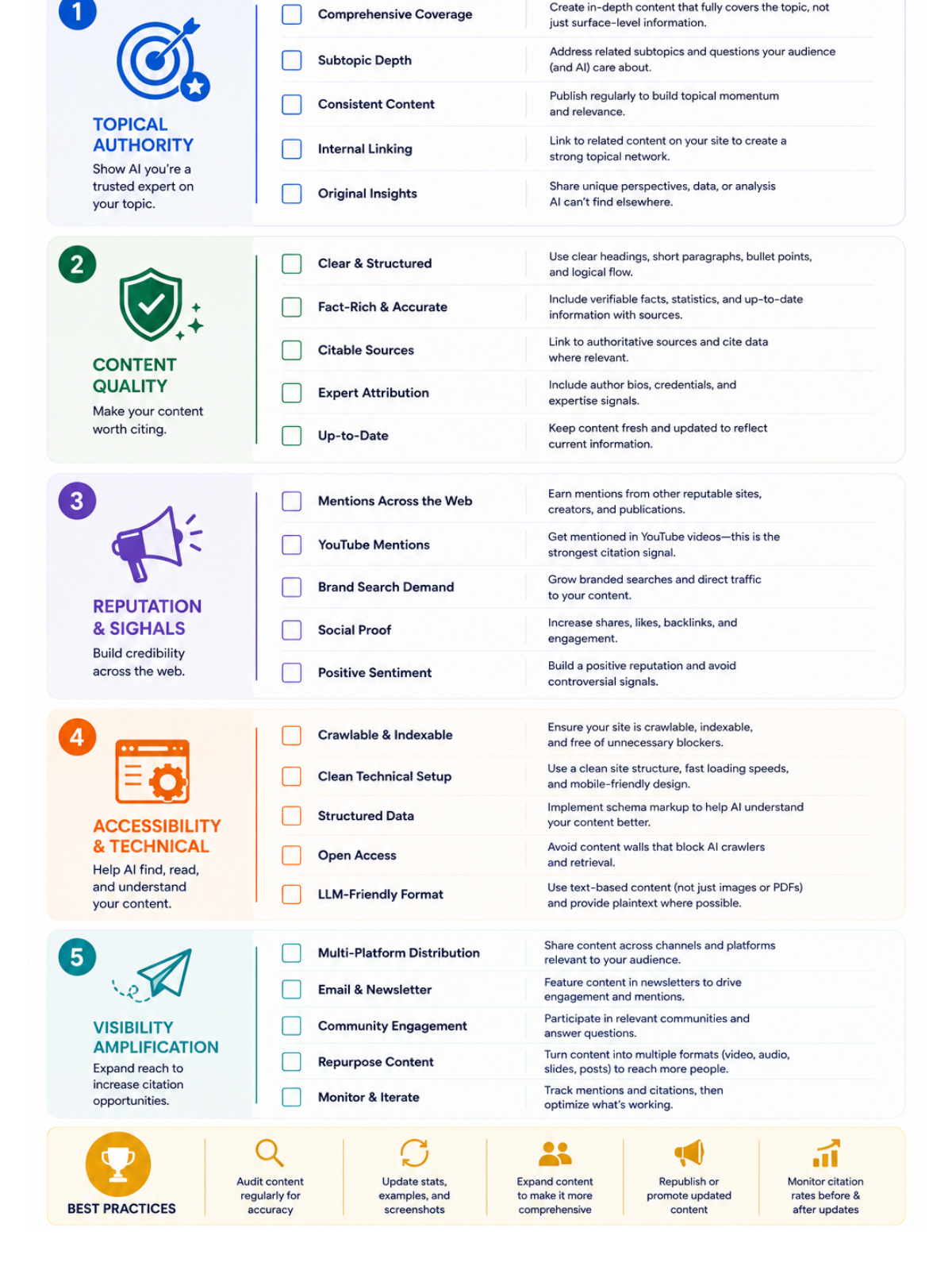
Use this checklist for every piece of content you want AI systems to cite:
- [ ] Clear H2 question headings that mirror how users prompt AI systems
- [ ] 2-3 sentence quotable answers immediately following each question heading
- [ ] Specific statistics with source attribution (increases AI visibility by 41%) (Princeton/Georgia Tech/IIT Delhi, 2024)
- [ ] Data tables for comparisons (AI systems prefer structured data for extraction)
- [ ] Schema markup (Article, FAQ, HowTo) to signal content structure
- [ ] Content updated within the past 90 days (add visible “Last updated” dates)
- [ ] Expert attribution in byline and body (E-E-A-T signals)
- [ ] Subheadings every 150-200 words (aids AI content parsing)
- [ ] Mobile-responsive formatting (AI systems evaluate user experience signals)
- [ ] Summary box at top of article (provides extractable overview)
This checklist aligns with the AI-ready content frameworks we use with NAV43 clients. Structure enables citability.
Content Freshness as a Citation Signal
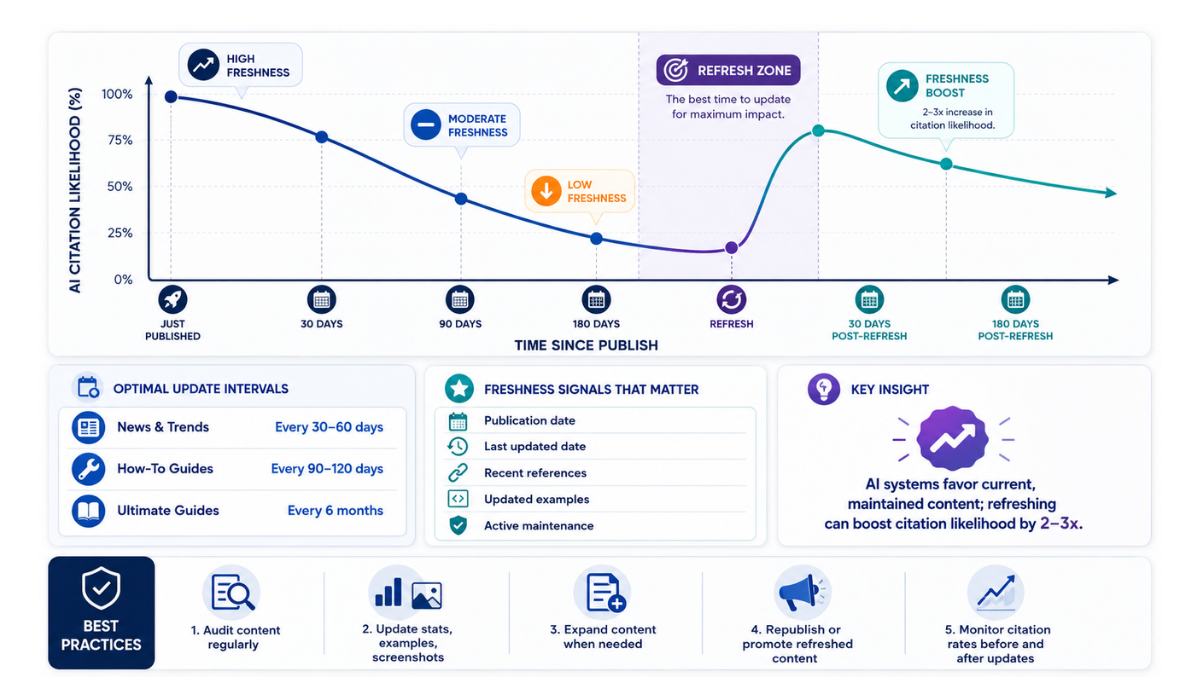
Let me expand on the freshness imperative because it’s where most enterprise content programs fall short.
ChatGPT shows the strongest preference for new content among all AI systems, citing URLs 393-458 days newer than comparable Google results. This means content that ranked well in traditional search three years ago may be invisible to AI systems simply due to age.
Establish a content refresh cadence:
– Fast-moving topics (AI, technology, industry trends): Monthly review, update as needed
– Evergreen guides and frameworks: Quarterly updates with substantive changes
– Pillar content and cornerstone pages: Semi-annual deep refreshes
“Update” means substantive changes, not just date changes. AI systems can detect superficial updates. You need 20%+ new material, updated statistics, fresh examples, or expanded sections. A new timestamp on unchanged content doesn’t improve citation rates.
This requires process changes for enterprise content teams. Build freshness protocols into your content calendar. Assign ownership for refresh cycles. Track content age as a core metric alongside traffic and rankings.
For detailed guidance on transforming existing content into AI-citable assets, see our guide on turning old blog posts into AI-ready content.
Platform Divergence: Why ChatGPT, Perplexity, and AI Overviews Require Different Strategies
One of the most important findings from recent research: only 11% domain overlap exists between ChatGPT and Perplexity citations for the same queries (Joshua Blyskal/Profound, 100,000 prompts analyzed, 2025).
This means optimizing for ChatGPT alone leaves you invisible on other AI platforms. Enterprise brands need platform-specific approaches.
Google AI Overviews adds another layer of complexity. According to BrightEdge, 83.3% of AI Overview citations come from pages beyond the traditional top-10 Google results. Different ranking factors apply. Pages that rank well in traditional search don’t automatically earn AI Overview citations.
Platform-Specific Optimization Priorities
| Factor | ChatGPT | Perplexity | Google AI Overviews |
|---|---|---|---|
| Primary Citation Source | Training data (65%) + Web search (35%) | Real-time web search (primary) | Google index + SERP data |
| Brand Mention Weight | High (0.664 correlation) | Moderate | Moderate-High |
| Freshness Preference | Strong (393-458 days newer than Google) | Very strong (real-time) | Moderate |
| Structured Data Impact | Moderate | High | Very High |
| Review Platform Signals | High (3x boost) | Moderate | Moderate |
| YouTube Correlation | Very High (0.737) | Lower | Moderate |
Tactical recommendations by platform:
ChatGPT: Prioritize brand mention density, the presence of YouTube transcripts, and review platform profiles. Training data matters most here.
Perplexity: Focus on real-time freshness and structured content. Perplexity performs live web searches, so recent, well-structured content wins.
AI Overviews: Lean into structured data and schema markup. Google’s AI features draw heavily from structured signals.
This requires auditing your visibility across each platform independently. The same query will surface different brands on different platforms. Use our AI visibility audit framework to identify gaps and create platform-specific optimization plans.
The Post-Ads Reality: How ChatGPT’s Monetization Changed Citation Patterns
ChatGPT launched ads on February 9, 2026. The immediate impact was significant: brand query citations fell 41%, from 4.95 to 2.96 citations per answer. By late March, citations had recovered to 4.5, but the landscape had permanently shifted (AirOps/Built In, 2026).
The mechanism: Ad placement initially displaced organic citations. Sponsored content took space that previously went to organic brand mentions. As the system stabilized, organic citations partially recovered but now compete with paid placements.
Strategic implications:
First, authority signals matter more than ever. With limited organic citation space, AI systems are more selective about which brands earn unpaid mentions. Brands with strong authority signals maintain citation share; weaker brands lose visibility to paid placements.
Second, expect continued evolution. OpenAI is actively monetizing ChatGPT, and ad formats will evolve. Brands that build organic authority now create a foundation that compounds regardless of how ad products change.
Third, paid and organic AI visibility are converging. Just as Google Ads and organic SEO have distinct yet overlapping strategies, ChatGPT ads and organic citations require an integrated approach. Budget allocation across both channels will become a standard planning question.
Common Pitfalls in AI Citation Optimization
After working with enterprise brands on GEO strategies at NAV43, we see these mistakes repeatedly:
Over-investing in on-page while ignoring off-site factors. The 75/25 split means three-quarters of your citation potential comes from brand mentions, review platforms, and community presence. Teams that obsess over schema markup while neglecting PR are optimizing the wrong lever.
Treating GEO as a one-time project. Only 30% of brands remain visible in consecutive AI responses. Citation patterns shift constantly. This requires ongoing investment, not a one-time optimization sprint.
Ignoring platform divergence. Optimizing for ChatGPT alone misses Perplexity, AI Overviews, and Claude users. Each platform has different citation patterns and requires distinct tactics.
Neglecting YouTube and video entirely. With the highest correlation factor at 0.737, YouTube mentions outperform every other signal. Brands focused exclusively on text-based GEO are missing the highest-leverage opportunity.
Waiting for the perfect measurement before acting. AI citation tracking is still maturing. Some brands delay action, waiting for better analytics. Meanwhile, competitors build authority that compounds over time. Act on directional data now; refine measurement as tools improve.
Confusing brand awareness with citation optimization. Traditional brand marketing doesn’t automatically translate to AI citations. The specific signals AI systems use, such as structured content, third-party validation, and transcript mentions, require dedicated tactics.
Conclusion: Key Takeaways for Enterprise Brands
Getting ChatGPT to cite your brand requires a fundamentally different approach than traditional SEO. The link-building playbook that dominated the past 15 years doesn’t translate directly to AI visibility.
The core principles:
- Brand mentions outweigh backlinks 3:1. Correlation data shows mentions (0.664) matter far more than links (0.218) for AI visibility.
- Thresholds matter. Citation rates jump at specific milestones: 32K+ referring domains, 190K+ monthly visitors, and presence on 3+ review platforms.
- YouTube is the surprise leader. At a 0.737 correlation, YouTube mentions outperforming every other factor. Video strategy belongs in your GEO playbook.
- Off-site factors dominate. The 75/25 Rule means three-quarters of citation potential comes from factors outside your website.
- Platform-specific strategies are essential. Only 11% domain overlap exists between ChatGPT and Perplexity. Optimize for each platform independently.
- Freshness is non-negotiable. Content over three months old is 3x more likely to lose AI visibility. Build refresh cadences into your content operations.
Next Steps: Your AI Visibility Action Plan
Week 1-2: Audit your current state.
Run your target queries through ChatGPT, Perplexity, and Google AI Overviews. Document where your brand appears, where competitors appear, and identify gaps. Use our AI visibility audit framework to structure this analysis.
Week 3-4: Prioritize off-site factors.
Map your brand mention footprint. Identify gaps in review platform profiles, earned media coverage, and community discussions. Create a 90-day plan to build mention density in high-impact sources.
Month 2: Address YouTube and video presence.
Audit your brand’s presence in YouTube transcripts. Identify podcast and video opportunities where you can be featured. Prioritize channels with established authority in your industry.
Month 3: Optimize on-page content for citability.
Apply the AI-Citable Content Checklist to your highest-priority pages. Update statistics, add structured data, and ensure content freshness. Establish ongoing refresh cadences.
Ongoing: Measure and iterate.
Track citation patterns monthly. Adjust strategies based on what’s working. Expect platform-specific differences and adapt accordingly.
AI citation optimization isn’t optional for enterprise brands. The 25% decline in search volume that Gartner predicts is already underway. The brands that invest now in building AI-visible authority will compound that advantage over time.
Ready to assess your brand’s AI visibility and build a citation optimization strategy? Get a Free Growth Plan from NAV43 and let’s audit where you stand across ChatGPT, Perplexity, and AI Overviews.
The window for building AI-visible authority is open. The question is whether you’ll move now or cede that ground to competitors who do.
